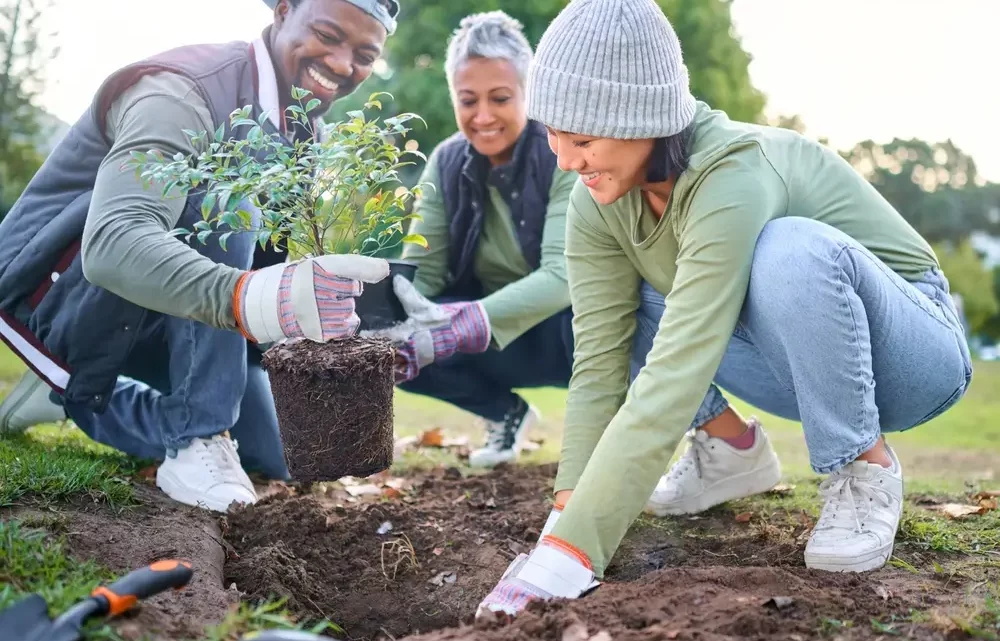
Why is reforestation essential in combating climate change?
11 July 2025Understanding reforestation and its climate significance
Reforestation is the act of planting trees in areas that previously supported forests but were deforested. It’s a primary means of reviving lands that were naturally forested, but have been stripped bare by logging, agriculture, or wildfires. When we lose our forests, wildlife loses its home and the planet loses one of its largest natural carbon sinks. Trees extract carbon dioxide from the atmosphere and sequester it in their trunks, limbs, and roots. This aids in delaying the accumulation of greenhouse gases, the primary force behind climate change.
Forests today absorb approximately 30% of all human carbon dioxide emissions. So when trees return via reforestation, they begin removing carbon from the atmosphere once again. It matters because when we deforest, two simultaneous things occur. First, those trees cease absorbing carbon. Second, clearing frequently releases significant amounts of carbon sequestered in soil and woody biomass. Reforestation reverses this by restarting the storage process. It’s not just any tree, anywhere. The species of tree, the climate and the soil all vary the carbon storage of a forest. Local plants tend to work best, as they are adapted to the climate and maintain soil stability.
Reforestation isn’t just carbon soak. It can reverse land degradation, i.e., it’s able to heal worn out or depleted land. Trees help lock in soil and bring back nutrients, reducing erosion. This enriches the soil for agriculture and pasture. Healthy forests retain water better, which can alleviate floods and drought. They house wildlife — nearly 80% of life on land resides in forests. This preserves endangered flora and fauna and maintains the ecological equilibrium. For humans, intact forests are about more than just purer oxygen. Some 1.6 billion of us rely on forests for food, employment and housing.
- The Great Green Wall (Africa): This project aims to grow an 8,000-kilometer band of trees across the width of Africa’s Sahel region. It halts the advance of the Sahara Desert, revives the soil, and sustains millions of people who dwell in its trail.
- China’s Grain for Green Program: One of the world’s biggest reforestation efforts, this program pays farmers to plant trees on sloped farmland to cut erosion and improve water quality. It spans millions of hectares and transformed entire regions.
- Amazon Rainforest Restoration: Groups in South America are working to replant native species and fix degraded parts of the Amazon. Being the world’s largest tropical forest, the Amazon is critical to both climate and biodiversity. Reviving it increases worlds carbon sequestration and safeguards tens of thousands of species.
Reforestation’s climate significance is influenced by thoughtful site selection, community engagement, and monitoring subsequent carbon storage. It is most effective when local communities are involved, as they are intimately familiar with the land and invested in its destiny. Good carbon accounting helps verify if these projects actually store carbon long-term. Reforestation is a powerful instrument, but it’s not a panacea and has to operate in conjunction with other climate fixes.
Carbon sequestration and greenhouse gas reduction
Forests are one of the Earth’s primary carbon sequestration techniques. They accomplish this by literally pulling carbon dioxide out of the air and sequestering it in their trunks, roots, and leaves. We call this process photosynthesis and it’s straightforward but potent. Trees harness sunlight and water to absorb carbon from the air. The carbon gets incorporated into the tree’s biomass and the oxygen returns to the atmosphere for us to breathe. Over time, this cycle slows the buildup of heat-trapping greenhouse gasses in our atmosphere.
When forests are lost or damaged, this natural carbon sink is compromised. From 1750 to 2019, fossil fuels contributed roughly 445 billion metric tons of carbon (GtC) to the atmosphere, while land-use changes such as deforestation contributed an additional 240 GtC. Oceans have absorbed roughly 170 GtC, and terrestrial ecosystems, such as forests, have absorbed an additional 230 GtC. Yet a significant portion of carbon remains in the atmosphere, exacerbating climate change. Because forests store so much carbon, reforesting or allowing old forests to regrow can pull some of that carbon out of the air and into living plants.
One mature tree can absorb as much as 22kgs (48lbs) of carbon dioxide annually. Multiply this by millions of trees, and reforestation is an obvious path to decarbonization. If it’s planting new trees or aiding forest recovery after fires or storms, reforestation helps new forest systems grow faster and maintains balance in the global carbon cycle.
Potential benefits of reforestation in reducing CO2 emissions:
- Captures carbon and greenhouse gases, stores carbon in wood and soil
- Rebuilds carbon stocks lost through land clearing or wildfires
- Maintains healthy ecosystems that will continue to absorb carbon for decades
- Assists in carbon sequestration and greenhouse gas reduction, mitigating the rate of climate change.
- Protects soil and prevents erosion, which keeps carbon in the ground
- Provides habitats for 80% of the earth’s land species, maintaining robust ecosystems
Certain trees have more carbon storage capacity than others. Fast-growing species such as poplars or eucalyptus absorb carbon rapidly during their initial years. Slow-growing hardwoods, like oaks, sequester more carbon in the long run, because they live much longer. Tropical forests, with their dense, evergreen foliage, are able to store more carbon per hectare than their temperate or boreal counterparts. Local climate, soil, and species mix all influence the capacity of any given forest to store carbon.
| Forest Type | Average Carbon Sequestration (tonnes CO2/ha/year) |
| Tropical | 10–15 |
| Temperate | 2–6 |
| Boreal | 1–3 |
| Plantation (mixed) | 7–12 |
It’s not easy to validate or to measure the carbon gains of new tree plantings or forest protection. It requires a while to verify actual carbon stock changes and approaches for monitoring such increases may be complex or expensive. Still, the core idea is clear: reforestation, when done mindfully, is a practical tool for pulling carbon from the air while keeping ecosystems healthy for the future.
Ecosystem services and climate resilience
Forests are a lot more than just green cover. They provide a multitude of ecosystem services that influence both planetary health and human well-being. When we say reforestation, we mean more than just trees. That’s what it’s about — restoring those ecosystem services that regulate climate, nurture life, and create security for communities.
Key ecosystem services from reforested areas include:
- Carbon storage and sequestration
- Water filtration and purification
- Support for biodiversity and wildlife habitats
- Soil stabilization and erosion control
- Benefits for local climate regulation
- Provision of resources like food, timber, and medicine
Reforestation stores carbon by pulling carbon dioxide out of the atmosphere and sequestering it in tree trunks, roots, and soil. Healthy forests alone have the capacity to store one-quarter of the carbon currently in our atmosphere. That’s a big deal for reducing greenhouse gases and stabilizing the climate. Carbon capture from trees, however, is not a silver bullet. The complete benefits, like reduced atmospheric carbon dioxide, might not manifest for two to three decades. Trees need time to grow and reach full working capacity, which means long-term strategies are required. Massive initiatives such as AFR100 in Africa that seeks to restore 100 million hectares by 2030 underscore just how much global collaboration is required.
Forests purify water by capturing rainfall, straining it through earth and releasing it into rivers and lakes. This action helps keep water supplies safe for drinking, farming and other uses. Tree roots secure soil, preventing erosion and landslides. In areas where land was cleared for agriculture or mining, reforestation returns these benefits. Fungi in the forest floor assist with nutrient cycling, decomposing dead plants and enriching the soil. This is critical for healthy tree growth and for maintaining the overall forest system in equilibrium, despite shifting climate patterns.
Restoring forests is crucial for wildlife as well. Forests are the “lungs of the Earth” not only because they emit oxygen, but because they harbor flora and fauna unique to them. When people clear trees or land, a lot of species lose their habitat. Reforestation gives them a second chance by restoring the habitats essential for their survival, nutrition, and reproduction. This is critical for maintaining biodiversity and enhancing the climate resilience of entire ecosystems.
Healthy forests help people, too. Trees reduce flood risk by absorbing rain and decelerating the flow of water over land. They assist in droughts by retaining water in the soil and keeping streams flowing longer. Forests can protect towns and cities from heat waves, strong winds, and heavy storms. When forests thrive in health and diversity, they provide protective blankets that cushion the impact of extreme weather. Less risk for crops and homes and lives.
Reforestation versus afforestation for sustainability
Reforestation and afforestation both are important parts of combatting climate change, but they’re not synonymous with each other. Reforestation refers to replanting trees in areas where forests previously existed, but had been felled or burned, typically within a time frame of ten to fifty years. Afforestation, by comparison, is concerned with establishing trees in areas that were not previously forested, like grasslands or abandoned farmlands. Both contribute additional greening to the earth and mitigate the impact of deforestation, but their strategies and outcomes have notable distinctions.
We tend to think of reforestation as returning lost habitat to its previous state and rebalancing nature. When trees are replanted where forests once stood, the soil, climate, and native animals are typically acclimated to welcome new growth. It can accelerate the comeback of native species and repair the land. Afforestation, in contrast, builds new forests from scratch. This is beneficial in areas where the ground is exposed or vulnerable to erosion, but it has its own complications. The land might not be suitable for trees, or the selected tree species might not survive as well.
They both assist to absorb Co2 from the atmosphere and sequester it in trunks, roots and soil. That process, known as carbon sequestration, is critical for reducing atmospheric greenhouse gases. Planting trees is not enough. The aim is to create robust, resilient forests that will endure for decades. This requires time, investment and attention, not to mention a strategy to ensure the trees thrive and local fauna comes back.
| Feature | Reforestation | Afforestation |
| Definition | Restoring lost forests | Planting forests on non-forested land |
| Typical Sites | Recently cleared forests | Grasslands, degraded land, or croplands |
| Biodiversity Impact | High (restores native habitats) | Variable (depends on species planted) |
| Risk of Invasive Species | Lower (uses native species) | Higher (non-native species may be introduced) |
| Soil and Water Benefits | Good (restores natural cycles) | Mixed results (depends on site and species) |
| Carbon Sequestration Potential | High (natural recovery) | High, but slower (new ecosystem establishment) |
| Examples | Amazon reforestation, Africa’s Great Green Wall | China’s “Grain for Green”, India’s “Green India Mission” |
Afforestation can be risky, particularly when non-indigenous tree varieties are selected. If planted with the wrong species, these trees can outcompete local plants, alter water cycles and even damage wildlife. For instance, such rapid growth species as eucalyptus can drain the soil of moisture, potentially impacting the region’s crops or rivers. These risks make afforestation projects need to be carefully planned, with local expertise and a species diversity adapted to the location.
In reforestation versus afforestation, it usually depends… on what the land needs. Restoring forests where they grew before, reforestation, is often more sustainable than afforestation, since it aligns with existing ecological conditions and can restore local biodiversity. When it comes to sustainability, reforestation is best for restoring land that was deforested and needs that plant cover back. Both are involved in reducing CO2, but the most effective projects are those that extend beyond the act of planting trees and seek to cultivate complete, functioning ecosystems.
Methods and innovations in reforestation

Reforestation combines traditional and innovative approaches to forest restoration, each with its advantages and limitations. It’s more than just planting trees, it’s about cultivating robust, sustainable ecosystems that combat climate change and empower local communities.
Manual planting is one of the oldest methods for restoring forests. Human hands plant saplings or seeds, typically once humans have fallen forests for wood, agriculture, or construction. This practical approach allows groups to select species that are most appropriate to soil, climate and regional requirements. Another old-school method is natural regeneration. Here, the land is allowed to recover naturally, with whatever seeds that are already in the soil or surrounding trees germinating. This is effective where forests can naturally regenerate with little assistance, although it can be slow and relies heavily on soil nutrition, seed availability, and precipitation. Occasionally, groups employ group cuts in managed forests, creating openings that can be as wide as twice the height of mature trees. This provides sufficient light for some types, such as oaks and loblolly pine, to grow in the sun, while others can thrive in shadowier areas.
Contemporary reforestation leans on new tools to accelerate and enhance success. Drone seeding is one of those changes. Drones could fly over difficult to access land, dropping massive quantities of seeds in a uniform pattern, allowing it to cover hectares in significantly less time. It’s useful post-fires or storms, where quick intervention is required. Another approach is through genetic selection. Teams select and cultivate trees that have a higher chance of enduring drought, pests, or illness. For instance, Douglas firs that are bred for robust roots or disease resistance can endure longer in shifting climates. Remote sensing, using satellite images, assists experts in monitoring the success of reforested areas, quantifying changes in forest cover, and identifying potential issues promptly. Agroforestry is taking off. By blending trees into farmland, communities receive the magic of crops, wood and shade, but maintaining more land in tree-cover. This both saves forests from clearcutting and provides farmers with a supplementary income.
Best practices for reforestation projects include:
- Select native tree species suited to the climate and soil
- Design group cuts or clearings around requirements of select trees
- Select healthy, disease free seeds and seedlings.
- Mix planting with natural regeneration where possible
- Track progress with satellite or drone data
- Involve local communities in planning and upkeep
- Design for profitability with agroforestry or polyculture
- Use adaptive management to pivot if issues arise
Long-term forest health requires monitoring and rapid reaction to changes. Remote sensing or on-the-ground checks monitoring allows teams to detect threats such as pest outbreaks or underdeveloped seedlings in their early stages. Getting adaptive management means changing the plan when something is not working, like switching tree species or leaving more space between seedlings. As it can take up to 10 years for soil to get rich again and about 25 for the full forest ecosystem to come back, monitoring these projects is crucial.
Social, economic, and policy dimensions
Reforestation matters for more than just the climate. It informs people’s lifestyle, labor, and relationship to the earth. When discussing reforestation, we have to think big picture—social connections, economics and policy. Knowing these sides provides a transparent view as to why reforestation is more than soil stewardship but community empowerment and justice.
How reforestation creates jobs and supports local economies
Tree planting is labor that requires humans. Reforestation provides employment to regions with limited alternatives. It employs labor to sow, nurture, and guard new forests. They’re typically local jobs, so residents from nearby towns don’t have to relocate to pay the bills. In other instances, reforestation introduces new forms of labor as well. Eco-tourism thrives as forests return with wildlife and beauty, providing guides, rangers and small businesses the opportunity to increase their income. Sustainably harvested timber, when done correctly, allows forests to continue offering their gifts without being cut down. For countless Indigenous Peoples, forests were not a workplace—they were tradition and family. Reforestation jobs help maintain these connections while still providing for a family.
Planting trees can address social, economic and policy aspects of poverty and inequity. For individuals with limited employment opportunities, tree-planting provides reliable income and new abilities. It even potentially adds value to the land, as green spaces increase property values and make towns more attractive. Cleaner air and water from new forests translates into less health issues, which saves money for families and local governments.
The role of community involvement in the success of reforestation initiatives
Reforestation works best when locals engage from the beginning. They understand the territory they inhabit—what flourishes, what fauna require, where waters run. Their feedback toughens plans and helps preempt issues. For Indigenous Peoples, inclusion in these projects may be the difference between maintaining autonomy over their land and lifestyle. When communities co-lead, it’s much more trusted and less likely to spark land ownership or usage disputes. Local communities can even establish new enterprises around forest tending, such as seed nurseries or eco-tourism facilities, distributing the advantages still more widely.
There are obstacles as well. Land use changes can alter the distribution of benefits from use or extraction. If not well planned, reforestation can even dispossess people of their land. Striking a balance across these social, economic and policy dimensions requires cracking open honest discussions with transparent guidelines that respect everyone’s input.
Government policies and international agreements that promote reforestation
There are laws and rules that determine the extent of reforestation. So, these days, most countries do have regulations safeguarding old forests and providing incentives for new plantings. These rules can arrive as tax breaks, grants, or assistance with seeds and equipment. Other statutes allocate land exclusively for reforestation or prohibit noxious uses such as clear-cutting. According to the IPCC, reforestation, together with improved forest management, can reduce as much as 7.3 gigatonnes of CO2 annually. That implies powerful policy has major strength to combat climate change.
Globally, agreements such as the Paris deal encourage countries to establish green objectives. International assistance, be it financial or technical, can render projects functional even in less endowed environs. The best policies are those that match local needs and involve all the stakeholders in the process.
The impact of financial incentives and carbon credits on reforestation efforts
Capital is an important incentive for forest restoration. Carbon credits allow communities to profit by absorbing carbon, and sell that to others who want to offset their own emissions. This provides the capital for tree planting and forest tending. Other research suggests allowing trees to naturally regenerate is cheaper and still delivers robust outcomes, making it a cost-effective choice in some areas. Governments and private groups could provide additional cash or benefits for reforestation, accelerating action.
Cash won’t solve everything. Successful outcomes grow from combining funding with indigenous wisdom, equitable policies, and genuine participation of individuals who inhabit or surround the land.
Challenges, risks, and future outlook
Attempting to restore forests is an important climate plan, but it brings with it genuine challenges and dangers. For forests, it’s wildfires, pests, disease, drought and even hurricanes. Strange wildfires and climate swings occur more frequently and strike more severely, at times erasing years of development in days. For instance, more than 50% of reforestation requirements on National Forest System lands are due to wildfires in only the previous two years. Historically, just 6% of these wildfire-induced needs could be addressed, as funding lagged. Storms pile on more stress—like in 2020, when a record 30 named storms struck and reshaped forests in numerous locations. These experiences demonstrate that creating sustainable forests is about more than planting trees—it requires wise foresight and patience.
Land use is another huge challenge. Forest land is frequently desired for agriculture, residences, highways, or mining. This can make for tension between reforestation efforts and the requirements of expanding populations. Funding caps things, as well — that makes it all slooooow. Reforestation initiatives may require decades for trees to mature and effectively sequester carbon. Carbon storage happens too slowly for reforestation to be a silver bullet solution to climate change — it has to be paired with rapid fossil fuel reduction.
There are risks if reforestation isn’t well planned. Monoculture plantations—where only a single tree variety is planted—may grow fast but don’t support much wildlife and can be more prone to crop failure if hit by disease or drought. Bad species choice can mean trees don’t thrive in the local climate—or can even become invasive, pushing out native plants. With 60,000 tree species, 80% of amphibians, 75% of birds and two-thirds of mammals, forests are home to a huge share of the world’s life. Plant the wrong mix of trees and you can disrupt these fragile webs and damage biodiversity rather than support it.
The future of reforestation is bound to be a hybrid of the old and the new. Tech is transforming tree planting and tracking. Drones can plant seeds from above over vast expanses. Satellites assist in detecting the most vulnerable areas of our forests or where regrowth is occurring. Global teamwork is growing, too, with more countries joining big pushes to restore forests. Still, the climate continues to shift, and forests have to be prepared. Which, in practice, means planting a diverse mix of species, selecting trees that thrive in hotter, drier, or stormier conditions, and nurturing sapling forests for the long term.
If reforestation is to work, it has to be adaptive and grounded in the needs of every location. Tactics have to change as the climate shifts. By building in resilience—using local species, keeping forests diverse, and planning for fire or drought—forests can stand strong as the world warms.