
Innovative approaches to preserving tropical forest canopies and sustaining biodiversity
15 July 2025Understanding the value of tropical forest canopies and biodiversity
Tropical forest canopies are a significant contributor to global ecology. They support more plant and animal species in a given area than any other ecosystem on Earth. High in the canopy, leaves in Asia’s tropical forests exhibit strong trait values including large leaf area, high calcium, potassium and magnesium content, and high water content. These characteristics assist in sustaining various animals, from birds and mammals to insects. That thick canopy works as a shield, helping to regulate climate by trapping heat and moisture, maintaining stable weather. It moderates the water cycle by intercepting rainfall and allowing it to drip slowly into the earth, feeding streams and rivers beneath.
It’s not just the wildlife that counts in the structure of the canopy. Strong, wide canopies sequester carbon in wood and leaves — delaying climate change. They ignite rainfall. Trees release water from their leaves into the air, which ultimately helps form clouds and rain over the entire region. Losing even part of the canopy can scale back these benefits quickly. Carbon that was locked up in trees gets released, and the change in rain patterns can make soil drier and reduce water rainfall for plants and people.
Canopy biodiversity connects to the entire forest’s health. When trees fall or are felled, sunlight spills in, drying the soil and easing the colonization by new, sometimes noxious, species. Endemic species, many of which can only survive in the canopy, lose their habitat. In tropical forests, the connection between flora and fauna is intimate—pollinators, seed dispersers, and predators depend on each other. Breaking that chain dilutes the entire system. Detecting all life is difficult. Research reveals that a single sample captures only 46% of insect diversity. If you want to discover 90% of all plant diversity in a tiny patch, you need 40 samples and even more for the invertebrates. Emerging tools from high-res global threat maps and passive rainwash eDNA track changes and uncover hidden species, yet these signals are confined to local ranges within tens of meters.
To capture that full picture of canopy value, researchers combine field notes, remote sensing and computer models. Fieldwork provides ground truth, but remote sensors from satellites or drones can blanket large areas, tracking shifts in forest cover and canopy health over time. Modeling helps forecast what could befall the canopy if lost, arming decision-makers with better planning tools.
| Ecosystem Service | Description |
| Carbon storage | Holds carbon in trees and soil, slows climate change |
| Rainfall generation | Helps form clouds and brings rain through transpiration |
| Habitat provision | Offers homes for diverse plant and animal species |
| Water regulation | Controls runoff, filters water, and keeps streams flowing |
| Nutrient cycling | Breaks down leaves and wood, feeds new growth |
| Climate regulation | Traps heat, keeps local and global temperatures stable |
Harnessing technology for monitoring and protection
Advanced solutions have a significant role in the way organizations monitor forests and their biodiversity. With rapid transformation occurring in several tropical areas, technologies that provide immediate information empower organizations to respond and strategize more efficiently. Employing a combination of cutting-edge technology and good, old-fashioned boots-on-the-ground effort translates into a more complete picture of what’s happening both up in the canopy and down below.
Drones and satellite imaging now allow communities to detect illegal logging, monitor forest health, and observe changes in canopy cover in near-real time. Before drones, crews walked or flew over to identify what was damaged — a process that took time and overlooked concealed areas. Now, drones buzz over vast expanses, capture crisp photos and beam them home within minutes. Satellites display the macro view, frequently from hundreds of kilometers above. Both tools assist in detecting sudden tree loss or patchy areas that require attention. These images help park rangers or local guards to know where to look next.
AI is transforming how data gets consumed. Forests release more data than any individual or even large teams can consume. AI sifts photos and audio and sensor readings, identifying indicators of risk or habitats of endangered species. This assists groups in plotting ‘hot spots’ where logging or fires occur frequently and where to concentrate patrols or plant new trees. AI tools further identify patterns, such as which months experience the highest rates of tree loss, assisting with strategy and resource allocation.
Combining remote sensing and ground surveys makes maps and reports far more crisp. Remote tools, such as satellites or drones, provide the wide-angle perspective, and field teams verify the on-the-ground reality. Camera traps–small cameras attached to trees–are now ubiquitous for monitoring wildlife. They capture images and videos as animals walk by, highlighting what wildlife is utilizing a region and their activity. Acoustic recorders capture bird calls or monkey cries—even if the animals remain hidden. All these tools are best deployed near trails or water or fruit trees that animals favor. These observation methods, combined with searches for tracks or nests, provide insights into wildlife health and assist in monitoring animal return following reforestation efforts.
Tech solutions don’t just help to spot problems but to ensure that money and effort are going where they matter. For instance, REDD+ leverages satellite maps to verify if nations are holding onto their forests, and it compensates them for doing so. This connects global ambitions, such as reducing carbon, with community efforts. Innovations like blockchain can monitor wood and foods from forest to ensure they’re cultivated responsibly.
- Drones: quick checks of canopy, tree loss, or fire damage
- Satellite imaging: wide-area tracking for deforestation and split-up habitats
- Camera traps: spot animals, count them, and track their habits
- Acoustic recorders: hear hard-to-find species and changes in wildlife calls
- AI software: flag risky spots, trends, and help plan patrols
- Blockchain: trace forest goods to stop illegal sales
- Remote sensors: watch weather, soil, and tree growth in real time
Integrating indigenous knowledge and local stewardship
Indigenous groups have inhabited tropical forests for millennia. By extension, their intimate connection to the land has produced forest stewardship practices that are well adapted to the local ecosystem. With the world’s increasing focus on saving forest canopies and biodiverse plant and animal life, more organizations are beginning to appreciate the wisdom of collaborating with these local specialists. These types of collaborations are crucial for maintaining equilibrium in these havens of green, particularly as external pressures intensify.
Collaborating with Indigenous communities to chart critical habitats, springs and river headwaters is an important initial move. These folks understand where rare plants flourish, where critters hang their nests, where the water really flows year around. Their livelihoods rely on these locations, so they observe subtle shifts that visitors could overlook. By walking the land with GPS tools and old stories, teams can sketch out areas requiring urgent assistance or particular attention. For instance, in regions of the Amazon, bands have utilized this collaborative mapping to identify locations where deforestation or agriculture would cause the greatest damage, aiding chiefs in formulating plans that circumvent those areas. These maps can steer where to plant trees, establish buffer zones, or simply leave alone.
Traditional practices tend to emphasize maintaining cycles of nature, not merely repairing damage. Selective planting is one excellent instance. That translates into selecting certain indigenous trees and plants for their benefit to the entire ecosystem, rather than those that grow quickly or are of high value. Local communities tend to combine deep-rooted plants, fodder plants and soil-binding plants. This blend prevents a single plant from dominating and provides insects, birds and other wildlife with additional habitats. In Borneo, Dayak communities plant fruit and hardwood trees in patches, restoring canopy and food for humans and wildlife. Though they sound minor, such actions, extended over time, become a significant factor in how healthy a forest remains.
Supporting grassroots initiatives that combine traditional knowledge and modern science can accelerate advances. These projects employ drones for speedy inspections; for example, they continue to rely on practices passed down from generation to generation about when and how to harvest or burn small plots. Communities in Central Africa, for example, employ fire in strategic ways to sweep underbrush while sparing large trees. They share findings with researchers, who monitor shifts in flora and fauna. This mix of expertise helps discover optimal practices that can succeed elsewhere.
Documented Indigenous stewardship models
| Region | Key Practice | Outcome |
| Amazon Basin | Participatory mapping & mixed planting | Increased canopy, richer wildlife |
| Borneo | Patch-based native tree planting | Soil saved, more bird species |
| Central Africa | Controlled burning, selective harvest | Lower fire risk, stable canopy |
| Northern Australia | Fire-sticks farming | Fewer wildfires, plant diversity |
Designing agroforestry and sustainable land use systems
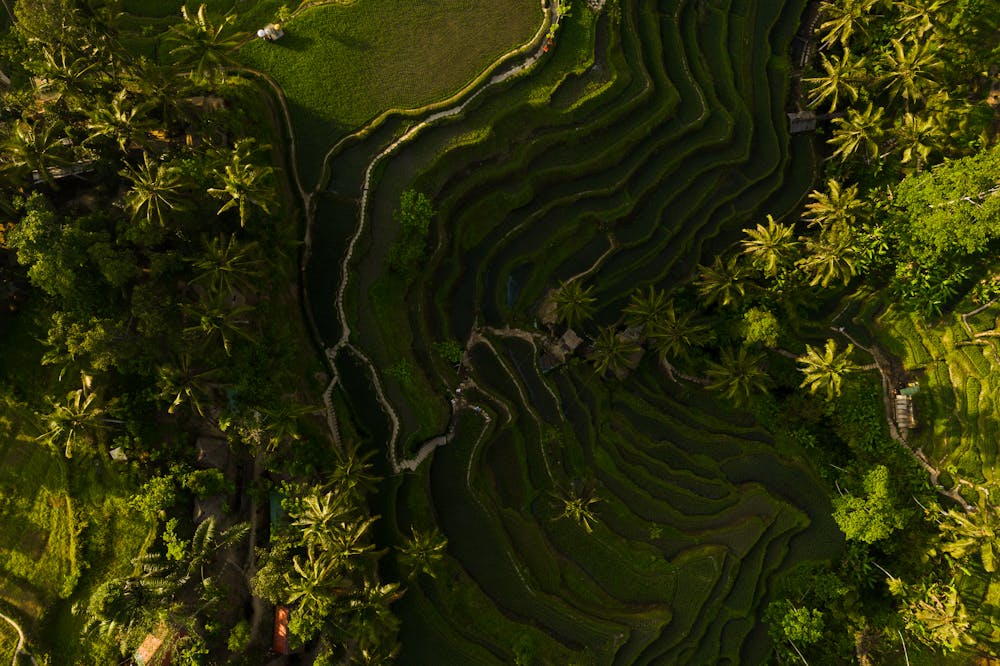
Agroforestry is an agroforestry and sustainable land use system that integrates trees, crops and occasionally livestock. That mixture can help maintain the forest canopy and increase biodiversity simultaneously. When established in the proper manner, they provide sustainable agricultural revenue, while maintaining forest integrity. The trick is to ensure these arrangements mimic the layers and plant diversity of natural forests, so the ecosystem remains robust and resilient.
Agroforestry is most successful when it’s designed to appear and function like an authentic forest. Diversity of tree and crop species invigorates soil, nourishes pollinators, and naturally controls pests with minimal chemistry. To illustrate, in certain systems, tall trees such as Toona can grow fast—achieving 37.4 cm diameter and 15 meters height—providing rapid shade and timber. Other trees may serve as nurse crops, assisting smaller or younger plant species in their growth by shielding them from sun or wind. Employing multiple species renders the system more resilient to ‘bad’ weather. During the brutal droughts and heatwaves in 2021 and 2022, fields arranged this way rebounded more rapidly than single-crop fields.
Multi-crop plots such as the Amazónicas Chakras in South America demonstrate how inter-planting multiple crops can aid both people and forests. Such plots employ layers—tall trees at the top, fruit trees and shrubs in the middle, root crops and vegetables below. This arrangement maintains soil moisture, halts weeds, and provides consistent food and income year-round. With so many crops all in one place, farmers shouldn’t have to cut down new forest to make fields. It relieves primary forest pressure and stabilizes local food supplies.
These policies have a major impact on land use. If governments incentivize farmers to retain native trees and utilize mixed planting, farmers become more inclined to continue these practices. Rules or markets that encourage you to grow only one kind of crop, like oil palm or soy, tend to lead to largescale clearing and habitat loss. Well-designed agroforestry and sustainable land use systems 4.5 About clear, fair policies that help landowners use land smartly can slow forest loss and save many more species.
Checklist for best agroforestry practices in tropical regions
- Choose the trees and crops species to suit your local climate and soil.
- Plant a combination of quick-growing, resilient, and practical trees for shade, lumber, or nutrition.
- Organize plant layers to mimic a forest.
- Space and thin trees as necessary—approximately 246 trees per hectare post-thinning.
- Prune trees to maintain their health and permit light to enter.
- Rotate crops and cover plants to keep soil rich.
- Observe and document the growth of trees and crops, and monitor the land’s health regularly.
- Modify the plan as required, in response to what the results indicate.
Advancing restoration and reforestation initiatives
Restoring forest canopy and protecting biodiversity requires a combination of traditional and innovative approaches. Forests have lost around 20% of their coverage since the beginning of the 20th century. Every year around 7.3 million hectares of forest vanish. So trees planted and regrown is a demonstrated method to combat climate change and restore what was lost. Organizing seedling collection and planting campaigns is key, with a focus on native species that match the local ecosystem. Sourcing seeds from local trees gives new growth the best chance for survival and restores local flora and fauna. For instance, in Southeast Asia, organizations commonly gather dipterocarp tree seeds — which are important for native forest structure — and distribute them into areas in need. In South America, planting Brazil nut and mahogany seedlings contributes to both restoration and reforestation efforts as well as future livelihoods for local communities.
Engaging locals at every stage is just as critical as tree planting. By involving local stakeholders, such as farmers and village groups, the trees have a better chance of survival — people have invested interest in their growth. These communities assist in monitoring the saplings, preventing invasive species, and ensuring the young forest thrives. In regions like Central Africa, initiatives to educate and equip locals to monitor tree health and replant where necessary have achieved greater rates of tree survival. When communities assist, we have a better shot at long-term success. Forests are not only trees—they provide nourishment, livelihoods, and sanctuary to billions of people globally.
Scientific research decides what trees to plant. Selecting the appropriate species combination creates a stronger and more diverse forest. Research indicates that biodiverse forests are more resilient to climate fluctuations as well as infestations of pests and disease. In Brazil, combining fast-growing pioneer species with slow-growing hardwoods achieves faster canopy closure and more wildlife habitat. Others cultivate pest-resistant trees to support young forests in combating insects and diseases — a godsend in outbreak-pummeled zones. Selecting the appropriate species mix is not merely about selecting species that grow quickly, but rather those that will persist and provide habitat for the entire ecosystem.
Nature-based solutions — or letting forests regrow naturally — can have a big role to play. Here’s how this approach can suck up to 8.9 gigatons of carbon dioxide annually through 2050. With restoration and reforestation moving forward, planting on flooded lands, abandoned urban spaces, and old pastures could absorb an additional 535 million metric tons annually. Although tree-planting expenses vary by region, the economic benefit of forest restoration stands at $84 billion. There are trade-offs to each approach, and the best programs often combine more than one.
| Method | Main Focus | Carbon Absorption Potential | Economic Impact | Community Role |
| Seedling Planting | Native species | High, if well maintained | Variable | Direct involvement |
| Natural Regrowth | Passive recovery | Up to 8.9 billion t CO₂/year | Low cost | Indirect, stewardship |
| Mixed-species Planting | Diversity, resilience | Moderate to high | Moderate | Training, monitoring | Urban/Pasture Planting | Degraded lands | As much as 535 million t CO2/year | Intermittent | Urban communities | Pest-resistant breeding | Disease control | RfCSs long-term carbon storage | High upfront cost | technical support |
Policy, funding, and incentive frameworks for long-term impact
Policy, funding, and incentives. By constructing robust governance and clever economic mechanisms, nations and institutions may assist in preserving forest canopies and their abundant biodiversity for generations ahead.
Strong legal shields are what forest protection is all about. National and international initiatives, such as Brazil’s Amazon Region Protected Areas (ARPA) and the Amazon Fund, establish policy frameworks and incentives with long-term funding horizons. ARPA funds and manages protected land, now spanning millions of hectares. The Amazon Fund aggregates funding from a variety of sources to support forest initiatives. These initiatives collaborate with national authorities and international counterparts, ensuring legislation is not merely theoretical but actively implemented. Legal backing means that new laws have to meet the needs of people living in or near forests so that regulations are equitable and sustainable.
Stable funding is the backbone of every big scheme. Without sustained funding, even the best proposals flounder. TFIF is a pioneering mechanism for mobilizing capital for forest countries that protect and restore their forests. The TFIF seeks to obtain 80 percent of its funds from private organizations, which encourages extended durations, such as 16 or 20 years, to ensure strides endure. This is accomplished by attaching funding to Sustainability-Linked Sovereign Bonds (SSLBs), with stable yields, say 5.75 percent, if forest cover is maintained. For instance, Thailand and Chile eye 16-20 year bonds to ensure future leaders align with forest ambitions. Such as $4 per hectare of forest per year in base payments provide countries with an incentive to keep forests standing. The Brazilian TFFF too is a big system with more than one arm, including the TFIF, to maintain cashflow for forest stewardship.
Paying people to protect forests is one of the critical components. Local groups usually have the most to lose and the most expertise on the land. Establishing incentives, such as payments or improved access to goods and markets, benefits such communities. If people can profit from keeping forests healthy, they have less motivation to convert land for immediate benefit. Such programs could be payment for ecosystem services, support for forest-friendly farming or handing over rights to manage land locally.
Key policy tools and funding paths used in tropical forest work include:
- Protected area laws with clear rules and enforcement
- International funding pools, such as the Amazon Fund and Global Environment Facility
- Sustainability-Linked Sovereign Bonds (SSLBs) tied to forest targets
- Direct annual payments per hectare of forest
- Community payment for ecosystem services (PES)
- Rights-based forest management for local groups
- Public-private partnerships to bridge funding gaps
- Monitoring systems to check forest cover and payouts
- Long-term, flexible contracts to deal with future risks
To keep forests whole is to value them for the planet. Just as saving a ton of CO2 in a tropical forest often does more good than cutting CO2 in other ways. Investors can experience a genuine return of approximately 7.6 percent for these ventures, albeit with some allocated—returns to investors could be nearer 4.9 percent, allowing additional funds to remain with forest countries.
Adapting to climate change and future challenges
As the climate continues to change, tropical forests have an intractable road ahead. These forests have been fairly stable in tree composition over the past 40–50 years, despite the new climate regime. Still, emerging risks such as droughts, insects, additional wildfires and elevated CO2 mean forest stewards must proceed cautiously. Maintaining the vitality of our forest canopy requires more than just reforestation—it requires thoughtful decisions aligned with a changing world.
Restoration plans now need to consider resilience to climate stress. Selecting native trees that can endure extended dry periods or temperature fluctuations preserves forests. By way of illustration, in certain parts of the Amazon, managers now prefer drought-ready species over those that require consistent rainfall. This swap stabilizes the canopy, even when the weather shifts. Planting natives supports local fauna who rely on these trees, maintaining the circle of life. Young forests especially, which can sequester up to 8 times the carbon per hectare of brand new regrowth, are a crucial weapon in the fight to trap carbon and slow climate change.
Observing the forest is as crucial as sowing the proper trees. Teams employ sensors, field checks, and even drones to monitor shifts in plant health, soil, wildlife, and pests. When new threats arrive, like insect outbreaks or increased fires, nimble management changes can minimize harm. For example, once a pest eliminates a specific tree, managers can replace it with another climate-ready species. Real-time data empowers teams to respond more quickly and keeps your ecosystem aligned.
Collaborating across disciplines is a huge progress. Science, locals, governments and companies come together to swap tips, trade cash. Together, they combine climate science with practical forest stewardship. This collaboration ensures that initiatives are more sustainable and can evolve as the world shifts. Sharing knowledge — such as results from new reforestation trials or wildfire data — helps us all make informed decisions.
There are a few key steps for building adaptive skills in forest teams:
- Train staff to identify and communicate field variations swiftly.
- Employ current maps and data tools to direct daily work.
- Establish mechanisms for disseminating lessons and updates to all partners.
- Review plans annually, using new research to adjust actions.
- Take regular fire or drought drills.
Science goes on. As additional research comes out, it’s evident that reforestation is not one-size-fits-all. The carbon advantage of tropical forests is greater and less impacted by the climate response than forests in colder locations. Yet future carbon storage depends on so much—climate models, rising CO2, wildfire risk, and the tree mix selected. In 92% of model runs, restored forests continued to store more carbon through the end of the century, unless major wildfires occurred, which could alter storage by 10–14%.