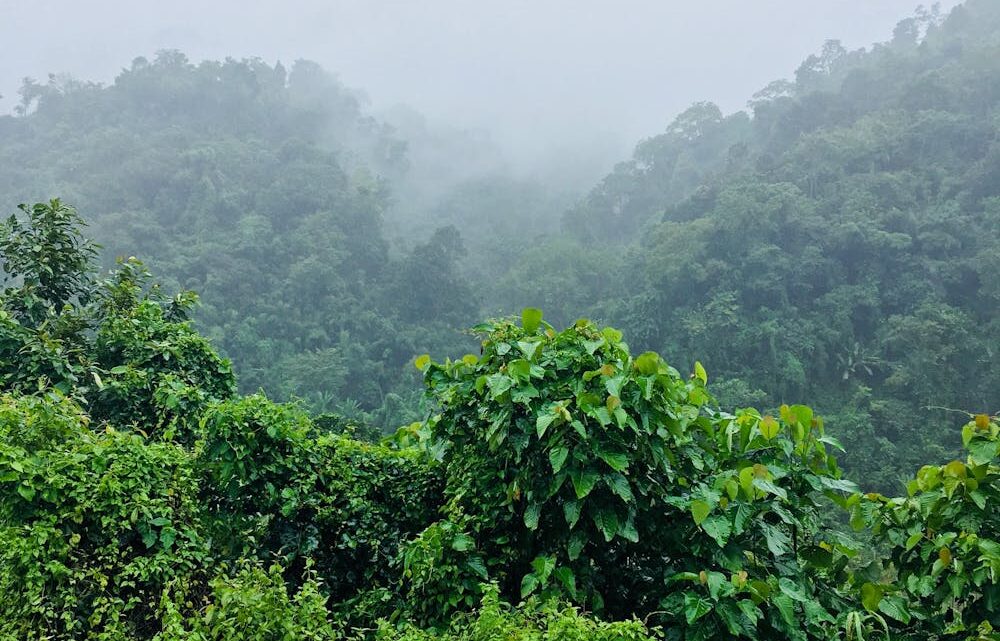
Understanding the impact of canopy cover and sustainable forest management on global warming
29 July 2025Canopy cover and climate regulation
When forests are healthy and dense, their canopies soak up massive amounts of carbon dioxide from the atmosphere. They take this carbon to build wood and leaves and roots, sequestering it for decades or even centuries. In areas such as dry Afromontane forests, this mechanism contributes to mitigating the increase of greenhouse gases. Forests store carbon both above and below ground, so when we lose trees, we release carbon, which accelerates warming. Forest management practices that leave canopies intact are an important step in reducing carbon in the atmosphere and reducing emissions.
Tree canopies are a huge factor in regulating temperatures as well. Leaves and branches create a canopy that acts as armor, preventing the sun from beating down directly onto the earth. This shade prevents heat accumulation, which is crucial for cities and rural areas. The data indicate that a 1% increase in canopy cover at 10 m reduces hourly temperature by roughly 0.01 °C. So if canopy cover increases from null to 100% in that area, the mean daytime air temperature decreases by 0.7 °C. This cooling effect can make a big difference during heat waves. The probability of temperatures exceeding 32.2 °C declines from 0.03 in non-canopy regions to only 0.006 in full-canopy areas. That translates into less time spent in scorching heat, a healthier outcome for humans, agriculture, and fauna alike. The high heat risk also decreases, with a 1.2 °C decrease in minimum temperature and a 1.0 °C decrease in maximum temperature when going from no cover to full cover.
Canopy cover, it turns out, does more than cool the air. Through evapotranspiration, trees transfer water from soil to air. This assists in maintaining air humidity and sustains cloud and rain. Steady rains are essential for agriculture, potable water, and vibrant ecosystems. Forest canopies hold soil. When rain strikes bare earth, it can wash away topsoil and nutrients. Canopies break the fall of raindrops, slow runoff, and help water soak in. This prevents erosion and reduces floods. Canopy-covered locations experience reduced storm damage and healthier soil for food cultivation.
The table below shows how high and low canopy cover regions differ:
| Type of Region | Canopy Cover (%) | Mean Daytime Temperature (°C) | Probability above 32.2 °C | Soil Erosion Risk |
Canopy cover and climate regulation | Dense Forest | 100 | Decresed by 0.7 | 0.006 | Low |
| Partial Canopy | 50 | Moderate | 0.01 | Moderate |
| Low Canopy/Open | 0 | Higher | 0.03 | High |
Forest ecosystem dynamics and resilience
Forest ecosystems are in a constant state of flux. They encounter storms, fires, pests and droughts. When this junk hits the fan, a robust forest can rebound. This rebound is heavily influenced by the local species richness, their spatial distributions, and the adaptive resilience of the ecosystem. In heterogeneous hardwood forests, if one variety of tree or flower or animal is struggling, there is another one to step up. For instance, certain seeds germinate only due to heat after fire. This allows the forest to regenerate in a manner appropriate for local conditions. For dry forests — that represent nearly half of the world’s tropical and subtropical woodlands — this bounce back is even more critical. These regions assist millions obtain meals, energy and jobs, however they’re at larger threat from intense land use and climate stress. Maintaining these forests’ health supports not only the trees and wildlife, but regional human populations and economies.
Species diversity is crucial for forest flexibility. When a lot of tree and animal variety co-habits, they occupy various niches. This way if one species falls ill, others can carry on. For example, certain trees may be more pest-resistant or drought-resistant with deeper roots. This combination of characteristics stabilizes the entire forest during weather or climate fluctuations. A species-rich forest will sequester more carbon, both above and below the ground. Soil organic carbon, for example, accounts for nearly 77% of the carbon in all forests. Aboveground components such as trunks and leaves contribute close to 18%. This blend enables forests to continue extracting carbon dioxide from the atmosphere, which in turn tempers global warming.
Vibrant forests generate feedback loops that enhance their resilience. When forests are healthy, they hold onto more carbon, helping combat climate change. A stable climate, in turn, helps forests thrive. Canopy cover, for instance, protects the ground, retains soil moisture, and defends seeds and seedlings from blazing sun or extreme temperature fluctuations. Forests assist the climate as well by returning water to the air through evapotranspiration, which cools the local region and sculpts rainfall patterns. These processes all interconnect, allowing the forest and climate to sustain each other.
Once the rhythm of a forest becomes broken, the consequences can endure. If too many trees are felled or scorched, or bugs exterminate particular varieties, the balance of the ecosystem can be lost. It diminishes the forest’s resilience to new threats, its ability to store carbon, or deliver clean water, air or healthy soil. Over time it can harm local populations that rely on forests for employment, sustenance, or energy. Dry forests are particularly vulnerable, as they already contend with challenging growing conditions and high demand.
Sustainable forest management principles
Sustainable forest management is about maintaining an equilibrium between human use and nature conservation. It’s about fulfilling the needs of today without compromising the ability of future generations to experience those same forests. This approach weighs three main goals: looking after the plants and animals that live in forests, making sure forests stay productive for jobs and goods, and caring for the people connected to these areas. Forests span more than two billion hectares around the globe, so the way they’re managed has a major effect on the climate, local economies, and the overall health of the planet.
Forests provide numerous advantages. They purify air, maintain soil fertility, provide sustenance and employment, and mitigate climate change by sequestering CO2. In others, such as northern Europe, prudent management has resulted in forests that grow well, yet protect wildlife and maintain the health of the land. The needs for wood and wood pellets for fuel can be hazardous. When we chop down forests too quickly or don’t replant them, it can destroy healthy forests, damage animals and release even more carbon into the atmosphere. This is why sustainable forest management matters for us all, regardless of where we call home.
Maintaining forests productive, preserving as much flora and fauna as possible, is part of this management. Just like us, forests require water, nutrient-rich soil, and a diversity of tree species to be resilient against storms, drought, and pests. Planting forests with diverse species makes them less vulnerable to being destroyed by disease or climate shifts. There is compelling research that allowing forests to regenerate naturally, where feasible, could absorb up to 8.9 gigatons of carbon annually through 2050. This can be accomplished without damaging either food production or native grasslands if carefully designed.
It’s vital to update our approach to forest management as the world evolves. Weather, pests and fires are not always predictable. It means forest managers must closely monitor forest health and be prepared to switch gears when necessary. Adaptive management is about taking decisions based on what’s happening today, not just on yesterday’s plans. This means monitoring tree growth, soil quality, and the biodiversity of flora and fauna.
Some core principles of sustainable forest management include:
- Selective logging, taking only some and leaving the rest
- Reforestation, planting in areas where trees were cut down or lost
- Preserving old-growth forests, critical for uncommon species and sequester lots of carbon
- To plan, to monitor changes, and to scale back harvests to maintain healthy forests
- Planting new forests with a mix of native species
Effective practices for climate mitigation
Sustainable forest management is one of the most powerful climate mitigation strategies. Forests absorb carbon dioxide from the atmosphere, sequester carbon in trees and soil, and contribute to temperature regulation. Well-managed forests can offer broader benefits, but they require management and the proper strategy to benefit both humans and the environment.
Afforestation and reforestation projects have been critical for climate mitigation. Planting new forests and reforesting degraded areas sequesters huge volumes of CO2. Studies find that increasing worldwide forest cover by 60% would sequester up to 860Gt CO2 by 2100. That’s still a huge move to decelerate the increase in greenhouse gases. The initial 20 years after planting are most crucial, as young forests absorb carbon at a greater rate. Restoring impaired forests replaces carbon lost from land clearing or natural disturbance, offsetting some of the damage from history. Significant forest area expansion can impact other requirements, such as food security. With the addition of 0.9 billion hectares of new forests, food prices might increase by a factor of four. Which means your planning has to balance both climate and human needs.
Reduced-impact logging is an effective practice. Instead of clear-cutting, they do selective logging and judicious removal of trees, which preserves more of the forest. It protects soil carbon stocks and provides conditions for young trees to regrow. As an example, we’ve recently learned that land use changes — planting pines or oaks in Scottish peatlands — led to effects on soil carbon that persisted decades after planting. By keeping logging impacts low, forests maintain their status as robust carbon sinks, while continuing to produce wood and other materials.
Agroforestry systems layer crops or animals with tree canopy, yielding dual food and climate gains. It’s an extremely effective climate mitigation practice that creates a wonderland for farmers across many regions, providing them with shade, enriched soil and supplemental income. Trees in fields or farm borders store carbon in wood and roots, but help hold soil and keep water clean. Agroforestry provides food and climate change adaptation. It is a means of expanding climate action, as it aligns with the existing lifestyle of millions of farmers across the globe.
Other techniques append these strategies. BECCS, or bioenergy with carbon capture and storage, could remove between 0.5 Gt and 5 Gt of CO2 from the atmosphere annually by 2050. Forests moderate daily and yearly temperatures, protecting against extremes and summer heat. Earth’s forests contain around 662 Gt of carbon, nearly half of which is found in the soil and nearly as much in tree biomass.
Effective practices for climate mitigation:
- Promote afforestation and reforestation in degraded or cleared areas
- Use reduced-impact logging to limit damage to forests
- Add agroforestry to mix farming and tree cover for more carbon storage.
- Restore soil carbon by protecting ground cover and judicious land use
- Support BECCS and other carbon removal options
- Balance forest expansion with food security and local needs
Carbon cycle optimization in forests

Forests are critical carbon sinks, absorbing and sequestering significant volumes of carbon from the atmosphere. How much carbon a forest might store is a function of its species mix, its age, and how well managers tend the land. Maximizing these factors enables forests to have a larger impact in mitigating warming.
Selecting optimal species and mixing them can increase carbon storage. Young forests planted with a diversity of four species can store approximately 70% more carbon above ground than forests planted with a single species. Mixed forests optimize sunlight, water and soil, so they grow faster and sequester more carbon. Age is a factor. Forests aged 20 to 60 years, particularly those in wet spots such as portions of North America, Asia, and Oceania, display rapid growth. Selecting the ideal age distribution in a forest allows certain trees to grow rapidly while others capture carbon for a long period of time.
It’s a must to monitor all that living stuff in a forest, or biomass, as well. Which means inspecting not only the trees, but shrubs and undergrowth, as well. Managers can employ sensors, satellite images, or on-ground checks as methods to determine the forest’s growth and carbon content. With periodic inspections, they can identify issues ahead of time, like infestations or illness, and respond quickly to preserve sequestered carbon.
Deadwood and soil, while not living, are a huge part of the carbon cycle. When trees fall, wood decomposes gradually, releasing carbon little by little. Soil can sequester carbon for centuries. Carbon soil can capture varies with climate. Factors such as precipitation, latitude, and frost-free days per year all contribute. Soil can store more carbon in wetter, warmer locations, but it is easily disturbed and carbon can be lost quickly.
Globally, specialists say around 1.1 billion hectares of new forest are required to extract sufficient carbon. When globally expanded by 0.9 billion hectares, these optimized forests could store up to 205 gigatons of carbon — roughly 70% of the additional carbon humans have dumped into the air. If forests grew 60% globally, it roughly equates to 860 Gt CO2 absorbed by 2100. Ending deforestation is equally crucial. Just clearing tropical forests extinguishes as much as 6.2 gigatons of CO2 annually. To keep warming under 2 °C, the world has to trap approximately 410 gigatons of CO2, making care for our forests a crucial component of effective climate action.
| Strategy | Example/Details |
| Mixed-species planting | Four-species mix boosts carbon by 70% vs. monoculture |
| Managing forest age structure | Focus on 20-60 year old stands in wet climates for faster growth |
| Monitoring biomass | Use satellites, sensors, field checks for accurate carbon tracking |
| Protecting and adding deadwood | Leave fallen logs to slowly feed soil carbon pool |
| Soil carbon management | Limit soil disturbance; factor in rainfall, frost-free days |
| Afforestation and reforestation | Expand by 0.9–1.1 billion hectares to meet global carbon goals |
| Avoided deforestation | Target tropical forest loss to prevent up to 6.2 Gt CO2/yr |
Socio-economic and community impacts
SFM impacts on socio-economics and communities. Our forest management practices can either support vibrant communities or put them in jeopardy—particularly as climate change accelerates the dynamics of weather, land, and resource access. Examining how these decisions cascade through gives a better sense of what’s on the line for economies, wellbeing, and society.
How sustainable forest management supports local livelihoods and job creation
They’re not just trees to forest-dependent communities—they’re food, medicine, fuel, and income for millions. Forests, when kept healthy, provide year-round employment such as planting, harvesting and wood processing, and employment in eco-tourism and non-timber products. One such example would be central African communities that gather wild honey and nuts from tended forests or Southeast Asian certified-timber projects that underwrite logging and restoration efforts. Sustainable means these jobs stick around longer, since the resources don’t get consumed as quickly as they do with clear-cutting or illicit logging. Not only does forest work remain in many areas one of the primary means of making a living, so sustaining these jobs matters immensely.
The role of indigenous and local communities in forest stewardship and decision-making
Indigenous and local communities hold intimate understanding of their forests, frequently accumulated across multiple generations. They know what plants grow where, when to harvest and how to identify early signs of drought or disease. When these groups have a genuine voice in forest management, results improve both for humans and the environment. In northern Canada, for example, First Nations oversee massive forest tracts with a combination of indigenous expertise and emerging tech. Work in Latin America demonstrates that once indigenous people legally own their land, deforestation declines. These communities often encounter obstacles like absence of legal status or exclusion from official schemes. Filling these gaps can benefit forests and their beneficiaries.
Economic benefits of ecosystem services from healthy forests
We often overlook the critical role our forests play in fueling economies. They clean water, capture carbon, sustain pollinators and protect from floods and heatwaves. These ‘ecosystem services’ reduce costs for water treatment and disaster recovery. In Europe, cities that source water from forested watersheds pay less in purification costs. In tropical countries, forest-based tourism generates billions. As we lose forests, the costs mount—bigger health care bills from heat waves, increased crop loss, and lost jobs connected to forest goods. After all, healthy forests are a safety net not easily replaced.
Challenges: land tenure conflicts and equitable benefit-sharing
Even with the plans in hand, trouble lies in wait. Controversies around forest land ownership or control can stall projects or cause conflict. In much of Africa and Asia, fuzzy land rights mean that locals neither can protect forests nor benefit from them. When timber or tourism profits flow to outsiders, local folk may not benefit greatly and this can sow mistrust. Attempts to address this—such as providing formal land titles or instituting equitable payment schemes—are critical for ensuring that forest management benefits all stakeholders. Without just rules, the potential for additional damage just increases.
Technology and innovation in forest monitoring
Technology and innovation are transforming forest monitoring: new tools are enabling unprecedented ease in observing forests and monitoring their transformation. Technology enables people to detect change earlier, monitor forest health, and spread the word about their findings. Several organizations are currently leveraging technology to preserve forests in a manner that significantly contributes to decelerating global warming.
Remote sensing and satellite imagery for real-time tracking of canopy cover changes
Remote sensing and satellite imagery allowed them to view the big picture from on high. Satellites can photograph forests, revealing areas where canopy is dense or sparse. These pictures refresh, frequently every couple of days. That enables them to detect fires, logging, storms or disease quickly, long before the harm propagates. Free data from the European Space Agency’s Sentinel satellites, for instance, allow anyone to monitor forests anywhere. Brazil’s satellites indicate more quickly where illegal deforestation occurs in the Amazon, allowing the government and groups to respond immediately. A lot of countries utilize these satellite maps to verify whether trees are coming back after reforestation efforts. The technology functions globally, including in areas inaccessible to foot travel.
Drones and AI-powered tools for precise forest health assessments
Drones fly lower than satellites and photograph more detail. They can buzz through a forest and capture crisp images or footage. Some are attached with sensors that track data such as leaf color or tree dimensions. This assists in detecting diseased trees or pests prematurely. Artificial intelligence — AI — helps sift through the massive volume of photos and identify trends humans might overlook. For instance, AI-equipped drones can map which trees are stressed by drought, so that managers know where to send assistance. In Indonesia, drones inspect mangroves after storms, identifying gaps or snapped trees at a much higher speed than those on foot. Drones and AI save time and make the work safer, as well.
Mobile apps and community-based platforms for participatory monitoring
Mobile apps and online platforms encourage people to assist in forest monitoring. Local groups, students or families can use their phones to log reports of fire, illegal logging or animal sightings. These reports supplement the formal data. Such apps, like Forest Watcher, allow anyone to upload a photograph or observation of what they encounter through the app, and the information flows directly to local officials. In Nepal, community groups use smart apps to monitor their biological plots, providing real-time updates. This type of collaboration fosters trust and reduces the chance that issues slip through the cracks.
Open-access data systems to improve transparency and policy effectiveness
Open-access data systems allow anyone to verify the information. They’re online portals where anyone — researchers, community leaders, or the public — can access maps, photos and reports on forests. When the data is open, it’s easier to see what’s on trend and to hold collectives or corporations responsible. Policymakers leverage this data to tailor regulations that align with actual conditions on the ground. Take for instance the Global Forest Watch platform, which posts updated forest maps online at no cost, enabling more informed decisions and transparent conversations. Open data means projects in Africa, Asia or South America can learn from each other and use what works.