Deforestation in numbers: why immediate action is critical
25 July 2025Global forest loss by the numbers
Tropical deforestation is a global problem that transcends national boundaries and touches us all, regardless of geography. The global forest loss by the numbers illustrates the magnitude of this challenge and why action needs to be accelerated. The view from data lets the world see what’s still on track and what must shift if we have any hope of curbing the loss of forests.
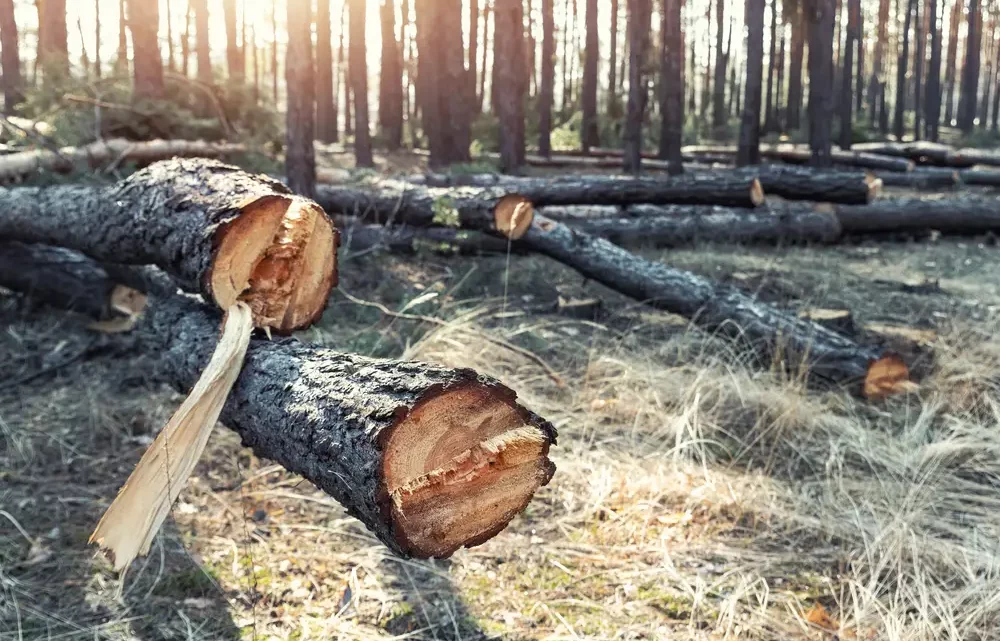
In 2022, the world lost 6.6 million hectares of forest, based on the Forest Declaration Assessment. This is almost 66,000 square kilometers—larger than countries like Sri Lanka or Lithuania. To put it in perspective, forests the size of a football pitch disappear every six seconds, and every minute, about 11 football fields of tropical rainforest vanish. These losses are not just numbers; they mean fewer trees to store carbon, less wildlife habitat, and a harder fight against climate change. Deforestation in 2022 alone led to 2.7 gigatons of CO2 emissions, a major driver in rising global temperatures.
The long-term trend is concerning. Since 1990, the world has lost over 420 million hectares—about one billion acres—worth of forest, the Food and Agriculture Organization of the United Nations estimates. Africa has come in second, and then South America, with the Amazon having 17 per cent of its rainforest wiped out in just the past half century. These aren’t short-term spikes; they’re a persistent pattern, and they demonstrate how deep-rooted and extensive the problem is.
There are international goals to halt deforestation by 2030, but we’re way behind. In 2022, the world was 21 percent off track. This gap indicates that existing measures fall short of keeping up with the rate of forest clearing. Old-growth tropical forest protection efforts have even larger obstacles. In 2022, the world was 33 percent behind where it needed to be to protect these irreplaceable forests. In that single year, 4.1 million ha of old-growth tropical forests were lost. These forests are essential to biodiversity and climate resilience and their loss is irreparable.
All the figures added up to a sobering truth. We are cutting down forests at rates that are orders of magnitude beyond what global agreements and science say we should. These numbers are not just numbers — they’re beacons of what is on the line and a call to action to the work that remains if the world wants to prevent lasting damage.
Primary drivers shaping deforestation today
Deforestation is a nuanced issue exacerbated by a combination of economic, social and political factors. Although there are dozens of causes of forest clearing, a small number of primary drivers dominate. They span continents and strike forests in ways that impact communities near and far.
Below: Top causes of deforestation, with examples and the type of impact.
| Driver | Example | Impact |
| Agriculture | Soy, palm oil, beef production | 60–80% of global deforestation, habitat loss, carbon output |
| Cattle ranching | Amazon, Brazil | 72% of Brazil’s deforestation, biodiversity loss |
| Commodity crops | Cocoa, coffee, rubber | Over 4 million hectares lost, soil depletion |
| Local resource use | Firewood, small-scale farming in Africa | Local habitat change, 9% emissions exported |
| Urbanization | Road building, housing | 0.6% of global forest loss, habitat fragmentation |
Agriculture is by far the biggest driver. Farming estimates indicate it causes between 60-80% of deforestation globally on its own. This encompasses industrial-scale clearing for soy and oil palm, as well as beef and dairy production. Cattle ranching is particularly important in Brazil, where it represents about 72% of deforestation. Demand for pasture and feed such as soy exerts strong force on forests, particularly in South America. Commodity crop expansion—cocoa, coffee, rubber—globally has led to the recent loss of over 4 million hectares of forest.
The role of local and regional markets cannot be dismissed. Africa’s deforestation is almost all locally driven — fuelwood, subsistence and smallholder farming, local markets. Just 9% of Africa’s deforestation-related emissions are connected to exports. Latin America, on the other hand, exports only around 23% of its emissions, with the majority of forest loss supplying local markets. This demonstrates how both global and regional demand are shaping deforestation, and the effect varies by region.
Illegal logging and infrastructure growth accelerate forest loss. Illegal logging frequently occurs in countries with weak regulation and limited monitoring. It is extracted without authorization or beyond authorized harvest regions. This is not just destroying forests, it’s ripping local economies to shreds and eroding faith in forest management. Roads, dams and mines— infrastructure that eases access to remote forests. Once an area is opened up, further clearing typically ensues, causing permanent land use change.
It’s a global problem, the demand for ag products. Over the past 50 years, soy production has expanded rapidly, much of it as animal feed. Beef, soy and palm oil are all major export crops, and their production connects countries and purchasers across continents. Much of Asia, Africa, and Latin America is now in a “transition” phase during which forest loss may accelerate or decelerate due to market and policy forces.
Weak governance and poor law enforcement allow deforestation to go unchecked. In even more places, weak regulations, bribery, and poor enforcement capacity impede attempts to halt unlawful clearing. Absent robust monitoring, land grabs and illegal logging can persist for years. Sustainable solutions hinge on tougher laws, improved monitoring and genuine support to indigenous communities.
Agricultural expansion and its global footprint
Agricultural expansion is the leading driver of deforestation globally, with forests in tropical regions the most vulnerable. Currently, approximately 70-80% of all tropical deforestation is attributable to conversion to cropland or pasture. At the global scale, when viewed in the context of 1840-1990, farming was behind virtually all (96%) of forest loss. Between the 1980s and 1990s, 83% of new farmland was converted from forests. Nothing new about that, but it has accelerated with the growing demand for food, feed and biofuels. Tropics still losing forests fast, with biggest changes in South America and Southeast Asia.
Brazil provides a lucid illustration of the impact that beef and soy supply chains have on forests. Beef production alone is associated with approximately 24% of all tropical deforestation, with cattle ranching accounting for 72% of Brazil’s forest loss. In addition, other Latin American nations like Argentina and Paraguay that experience significant deforestation for livestock account for 11 percent. Beef and forest loss are tightly linked together with vast tracts of the Amazon and other biomes razed for grazing. Soy is the other star, with global production now more than 13 times higher than in the 1960s. Since most soy is used for animal feed, this intensifies the deforestation demand. In Brazil, the most significant deforestation reduction push was the soy moratorium in 2006, when large purchasers pledged not to purchase soy on land that was recently deforested. This caused a huge decrease in deforestation, and by 2014, just 1% of soy expansion encroached on forests.
| Commodity | Share of Tropical Deforestation | Main Regions Affected | Main Use |
| Beef (Cattle) | 24% (Brazil), 11% (other Latin America) | Brazil, Argentina, Paraguay | Meat, leather |
| Soy | Less than beef, but rising fast | Brazil, Argentina, Paraguay | Animal feed, oil |
| Palm oil | Significant, but regionally focused | Indonesia, Malaysia | Food, cosmetics, biofuel |
| Other crops | Lower per crop, but add up | Global | Food |
International markets and consumer decisions influence where and how such crops are cultivated. Most deforestation-linked products, from beef to soy to palm oil, are traded and sold thousands of miles from where the forests are felled. Demand in one country can spur forest loss halfway around the world. Purchasers and firms that answer the call can slow this decline. Take, for one instance, the soy moratorium in Brazil, which succeeded due to global traders and buyers prepared to step up. Yet, at least 90% of cleared forest occurred where agriculture was the principal agent, yet only around half converted to productive farmland. In other words, we’re losing a ton of forest with no food output benefit whatsoever, highlighting the importance of improved land use.
Environmental consequences and ecosystem disruption
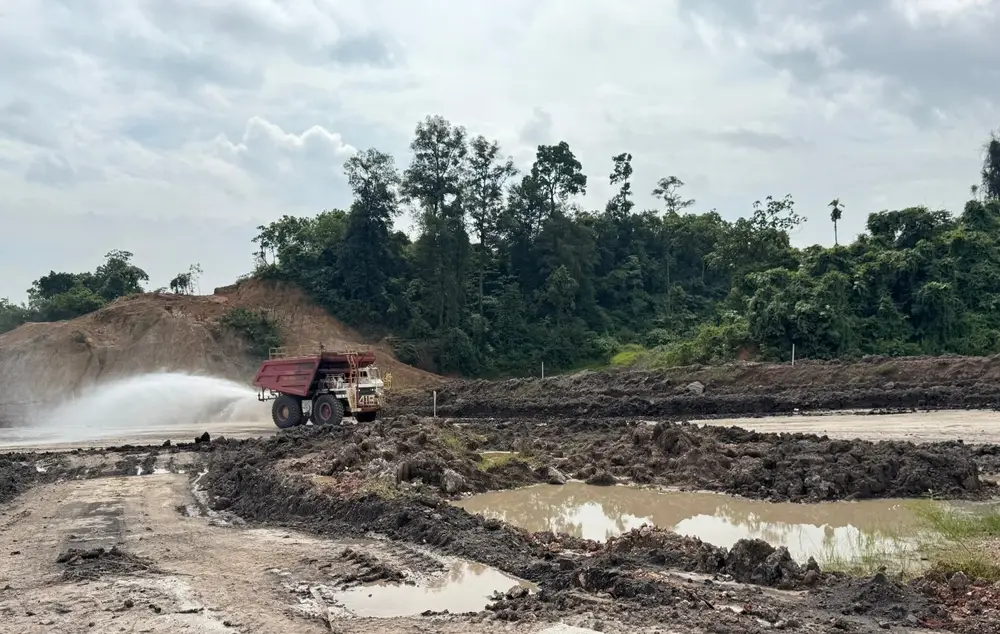
Deforestation shifts the equilibrium of the world’s ecosystems, endangering numerous plants, animals, and even humans. It’s not just about less trees. It’s about how forests sustain life, maintain clean air and clean water, and preserve healthy soil. Each year, some ten million hectares of forest disappear — that’s an area the size of Portugal. The statistics illustrate the imperative for immediate solution.
The most immediate effect is loss of biodiversity. A lot of wildlife and vegetation rely on forests for survival. When forests are thinned for agriculture, urban spaces or timber, these organisms lose their habitat. In species-rich tropical forests, deforestation has already sent many animals and plants to the brink of extinction. Others vanish before they’re even known or studied. This loss isn’t just tropical. Take the boreal forest, for instance, which is being felled for industrial use at the rate of a million acres every year. Every patch that goes means less habitat and less opportunity for species to persist and evolve.
Forests have a huge impact on water cycles. Trees draw water from the earth into the air, and their roots trap it in the soil. Once the forests are gone, it can no longer rain. Certain areas could be drenched and others left dry. The potential for ecosystem damage through drought increases when forests are absent or unable to trap this moisture. Last year, hot and dry conditions fanned wildfires that scorched over 18m hectares — a demonstration of how interconnected forests are with climate and precipitation. These blazes can exacerbate drought and it’s when we are hurting people and wildlife.
Soil erosion is yet another concern associated with deforestation. Without trees, soil is exposed to the wind and rain. It washes or blows away far quicker than it can reform. This in turn weakens the land for farming or other uses. Over time, land becomes barren and worthless. Forest loss puts even more greenhouse gases into our air. Healthy forests store 861 gigatonnes of carbon and absorb approximately 16 billion tonnes of carbon dioxide annually. When forests are cut or burned, much of this stored carbon is emitted. Just tropical deforestation from 2010 to 2014 released an average of 2.6 billion tonnes of CO2 annually, accelerating climate change.
As forests decline, so too do the services they provide to humans and the earth. Pollination, pest control and other ecosystem services all rely on healthy forests. With fewer bees, birds and insects, the crops won’t grow as well and pests spread faster. Forests filter water and keep the air clean, not to mention that they are a source of food and medicine. When forests vanish, these rewards dim, leaving life more difficult for many societies.
Carbon emissions and climate impact
When we chop down forests, we release massive amounts of carbon that they’ve stored for decades. When those trees are gone, the carbon moves into the air, heating up the planet and accelerating climate change. Forests support us by absorbing carbon, like a sponge, and reducing the rate at which our planet warms. When we lose forests, we lose this assistance—making it more difficult to keep climate change under control.
We call forests carbon sinks for a reason. They absorb carbon, keeping it out of the air where it would contribute to warming our planet. If we continue to lose our forests, we lose one of the most important tools the world has to contain rising temperatures. Even with forests regrowing, the numbers are small. The trees that have grown in these last nineteen years only soak up less than 5% as much carbon as all the forests do. Planting a hectare of forest doesn’t compensate for losing a hectare. New trees don’t store carbon like old forests do, it can take years. So, the loss is more than just a figure — it’s a permanent reduction to the planet’s climate-fighting arsenal.
Halting deforestation is critical if we are to reach global climate targets. Nations across the globe have committed to reduce the carbon in the atmosphere. If forests continue to fall, these goals become more difficult to achieve. About one-quarter of global forest loss is due to deforestation, and around 14% is attributed to the consumption patterns of wealthy nations. This implies that decisions anywhere can have major consequences everywhere. During the 2010s, the world still lost twice the size of Spain’s forests — even though it got a little better. Twenty-four million hectares of tree cover lost in 2019 alone and we chop down around fifteen billion trees annually. These figures illustrate the disconnect between our aspirations and reality.
A majority of the deforestation carbon comes from a handful of nations. These places have the biggest effect on the world’s carbon numbers:
- Brazil: about 70% of deforestation emissions
- Indonesia: about 80% of deforestation emissions
- Other top contributors: Democratic Republic of Congo, Peru, Colombia
In Africa, tree loss is largely driven by local demand rather than export. Just 9% of Africa’s deforestation emissions are exported. Agriculture dominates everywhere else. It drives 60 to 80 percent of all deforestation. This implies that what people consume, the origins of food and its cultivation or production method all play key roles in determining the destiny of the Earth’s forests.
Indigenous communities and cultural resilience
Indigenous peoples are key custodians of forests and forest biodiversity. They account for approximately 476 million people worldwide, inhabiting all continents. Indigenous groups own, manage, or inhabit approximately one-quarter of the Earth’s land, which contains 80 percent of the world’s biodiversity. Their homelands—from the Amazon to Southeast Asia and Africa—are frequently on the frontlines of deforestation. These forests aren’t only homes. They’re core to cultural identity, spirituality and traditional lifestyles. When trees fall or forests are logged, the harm is not only of fallen trees. It’s the loss of culture and tongue and that profound connection to the earth.
True traditional Indigenous ways of life are influenced by generations of knowledge of how nature functions. A lot of these practices facilitate better stewardship of land and animals. For instance, rotational planting, light harvesting or selective foraging allow flora and fauna to regenerate every season. Indigenous wisdom tends to perceive all life as interconnected and the earth as holy. It’s a perspective that informs decisions that maintain forests’ ecological health — be it how to hunt, what to plant, or use fire to aid some plants to grow. These practices maintain the forests’ vitality, nourish flora and fauna, and even sequester carbon that combats climate change. The forests of indigenous and tribal peoples’ territories store approximately 34,000 million metric tonnes of carbon—a key buffer against global warming.
Deforestation imperils the heart of indigenous existence. When forests are cleared–for agriculture, for mining, for roads–it means displacement, often forced. So many Indigenous Peoples lose their homelands, experience fragmented communities and fading traditions. It’s not just a cultural loss. The well-being of these communities suffers as well. Deforestation can introduce new diseases, contaminate water, and diminish access to traditional medicines and foods. The fate of indigenous people is intertwined with the land, and the impact of deforestation extends well beyond its physical footprint.
Indigenous Peoples have a long history of being left out of major decisions regarding forests and climate action. Because of historical marginalization and unequal power they’ve at times been excluded or sidelined. Studies find that forests on lands legally held by Indigenous Peoples are cleared at far lower rates than elsewhere. Protecting and promoting indigenous land rights isn’t just right, it’s what actually works. When conservation plans include indigenous voices, the results are smarter, stronger. Their knowledge — everything from animal habits to seasonal shifts in the terrain — is a valuable resource for forestry. If the world is going to hit climate goals, Indigenous Peoples must be included in climate policy and decision-making.
Solutions, innovations, and policy effectiveness
Attempts to cool deforestation rely on a combination of international commitments, NGO initiatives, fundraising, and policy shifts. All of them seek to reduce deforestation, increase reforestation and keep perpetrators accountable.
International agreements have established the tenor. Both the Glasgow pledge and the NY Declaration on Forests called for an end to forest loss and an emphasis on landscape restoration. These commitments place figures—like halting deforestation by 2030—at the heart of strategies. Even if they demonstrate intention, advancement has been hit and miss. Global forest loss remains above 10 million hectares per year. To reach even near-term targets, the world must reduce deforestation by at least 10% annually. These pledges count the most when supported by action and not just rhetoric. For instance, triumphs such as Brazil’s ‘Soy Moratorium’, which shrunk soy-linked deforestation in the Amazon from 30 percent to 1 percent, demonstrate what works when consumers and authorities align around hard targets. Such measures must encompass other crops and areas. Agriculture, of course, powers 70-80% of tropical deforestation.
Nonprofits and coalitions add critical backing. Initiatives such as 1t.org, which drive the restoration and growth of 1 trillion trees, become a rallying banner in this regard. They connect governments, companies, and community groups to plant, guard and renew tree cover. The Tropical Forest Alliance addresses the supply chains driving forest loss. Consulting with businesses, they advocate for goods that aren’t sourced from logged-over woodlands. Change isn’t just about planting trees, it’s making sure that local people and Indigenous groups – who guard 80 percent of the world’s biodiversity – have a starring role.
Money, or the absence of it, is a frequently progress-delaying factor. With over 420 million hectares lost since 1990, small grants and patchy funding isn’t enough. Public and private money must grow. Healthy forests underpin 1.6 billion people, so investing means safeguarding livelihoods. Governments can increase funding for forest protection, but private companies have to be ambitious, tying their revenues to forest health.
Tracking change and holding organizations to account are as important as funding or planting. New technology for real-time detection of tree loss and illegal land grabs. Open monitoring systems, like satellite tracking, illuminate where promises are unfulfilled. These just work if regulations tend to be enforced. Tougher laws, defined sanctions and transparent reporting keep deforestation goals accountable.