Urban forests reduce heat islands and improve air quality in louisiana
2 September 2025Understanding urban forests in Louisiana
Urban forests are interconnected groups of trees, bushes and other vegetation located within the confines of cities and towns. These can be parks with native oaks and magnolias in Louisiana, crepe myrtles along wide boulevards or even small wooded lots nestled between homes. Community gardens, street trees and any spot that’s at least 10 percent tree-covered are part of our urban forests. These spaces define the experience of city living, making cities vibrant and palatable.
Louisiana’s urban forests contain a diversity of native trees and plants. Live oaks, bald cypresses, southern magnolias and sweetgums thrive in the state’s climate and soil. Native shrubs and groundcovers, including yaupon holly and switchgrass, flourish here. Not only do these trees thrive in urban environments, but they provide sustenance and habitat for birds, insects and other animals. Selecting native species is important for thriving urban forests—they’re better equipped to deal with heat, precipitation and pests than foreign alternatives.
Urban forests are different than rural ones. In cities, green space tends to be smaller and surrounded by a lot of concrete, roads, and other buildings. That translates into trees suffering more stress from heat, pollution and confined soil. Unlike its rural counterpart, which can grow full and free, the urban forest requires more upkeep in terms of pruning, watering, and soil maintenance. Their primary occupations are different. Whereas rural forests provide timber, habitat and hydrology at broad scales, urban forests are all about improving the human and wildlife experience in close quarters.
One of the great advantages of urban forests is their assistance with urban heat. In fact, surfaces like concrete and asphalt in urban areas absorb and retain heat, increasing temperatures by a few degrees when compared to surrounding rural areas. Known as the “heat island” effect, it intensifies as climate change brings hotter weather. Trees slash city temperatures by as much as 11°C (20°F) by providing shade and evaporating water through their leaves. This cooling is most important during the hot summer months, when heat waves threaten people’s health.
Urban forests purify the air, too. Trees absorb pollutants and capture dust, helping to make the air safer to breathe. As little as 30 city trees per automobile can, according to leading studies, wipe out most smog. This is valuable in the real world, as bad air quality is linked to health issues. Urban forests provide us with spaces to unwind, frolic, and appreciate the outdoors — in addition to purer air and less sweltering blocks. They increase home values and they make cities appear and feel more inviting.
Maintaining healthy urban forests in Louisiana can be challenging. Hurricanes and strong storms can topple or harm hundreds of trees at a time. This loss not only affects air quality and shade, it results in additional expense and effort for local communities. City leaders and residents alike frequently had to unite to plant, nurture, and preserve these green sanctuaries.
Air quality improvements through urban forestry
Urban forests help make the air safer in traffic-clogged cities densely populated. Trees absorb pollutants such as ozone, nitrogen dioxide and fine particulate matter from vehicles, factories and fossil fuels. They’re harmful to people’s health and worse for asthmatics and those with lung issues. Leaves and bark trap dust and smoke, reducing the possibility of breathing complications for those nearby. Research reveals that trees in an urban setting increase heat comfort by up to 10 times during peak hours, demonstrating their ability to cool and refresh air.
Urban trees are a major air filter. Think of them as living screens, intercepting dust, smoke and particles before they enter people’s lungs. As for ozone and nitrogen dioxide—both prevalent in heavy city air—trees soak them up during photosynthesis. Which equals less of these bad boys in the air we all breathe on a daily basis. In practice, tree-shaded city streets frequently have less dust and smoke than bare ones. It’s this sort of filtering impact that contributes to cities having fewer unhealthy air quality days.
Carbon sequestration is another strong benefit. Trees absorb carbon dioxide, another greenhouse gas contributing to climate change, and sequester it in their wood, roots, and leaves. This, in turn, slows the buildup of greenhouse gases in the atmosphere. Because some types of trees store carbon better than others, getting a mix in there enhances this impact. Urban forests can store immense quantities of carbon, meaning they feature prominently in climate plans of numerous nations. In Louisiana and beyond, it’s investing in urban forestry, which means leveraging nature to help sequester carbon and cool temperatures by as much as 7 °C during heat peaks.
There’s more to urban forests than clean air. They assist with stormwater management, cool cities, and even reduce energy bills by shading structures. These trees increase property values and beautify neighborhoods. City planners have a nature-based tool in urban forestry to help cities in the Global South, where heat and pollution can be so much worse. Consider Polish cities that have increased their tree cover from 15–34% to as much as 51%, resulting in improved air and cooler streets. It’s been found by annual studies that trees provide more than $389 million in ecosystem benefits, with clean air being a significant chunk of that value.
| Area Type | Ozone (ppb) | Nitrogen Dioxide (µg/m³) | Particulate Matter (µg/m³) |
| Dense tree cover | 18 | 22 | 13 |
| Sparse/no tree cover | 34 | 41 | 28 |
Mitigating heat islands with green cover
Urban heat islands occur when built-up areas capture and retain heat, causing cities to become significantly warmer than surrounding rural regions. Dense roads, dark roofs and scant trees cause heat to hang near the ground, pushing summer temperatures 1.8 to 5.4°F (1 to 3°C) above those in nearby rural areas. Greening as a solution to heat islands
Tree canopies are an important piece of this transformation. All summer long, a tree’s leaves and branches shade out more than 70-90% of the sun’s rays, allowing only 10-30% of the sunlight to reach the ground. This shade helps keep streets, sidewalks, and homes cooler — particularly in neighborhoods with little green. Research indicates that urban areas with adequate tree cover experience decreased maximum daily summer temperatures by 2–9°F (1–5°C). The shade of trees decelerates the heat accumulation on concrete and can even make mid-day strolling more tolerable. When planted near homes, trees can reduce energy expenditures by up to 25%, since less sunlight enters and AC’s don’t have to overexert themselves.
The other way trees help is with evapotranspiration. This is the way that trees pull water from the earth and up through their trunks and out through their leaves into the atmosphere. As the water evaporates, it carries heat away, cooling the air surrounding the tree. When enough trees collaborate across a city, this can pull down the overall temperature, shifting the city’s microclimate. With sufficient green canopy, the temperature reduction from evapotranspiration and shade is tangible, making everyday life less dangerous during heat waves.
Green roofs are one more tool in cities in Louisiana and everywhere else. These are layers of soil and vegetation applied to rooftops. Their surface can be up to 56°F cooler than regular roofs, and they can cool the air around them by as much as 20°F. Green roofs prevent heat from entering buildings, reducing cooling demand by 70% and decreasing indoor air temperatures by up to 27°F. On average this translates into annual energy savings of $0.15-$0.57 per square meter for cooling, along with additional savings on heating in winter. Green roofs are suitable for various kinds of structures, ranging from large industrial facilities to residential houses, and can be designed to be low-maintenance or to accommodate more extensive gardening.
When cities grow their green cover, they consume less energy to cool and they make life better for all of us. In Louisiana, several cities have put urban forestry plans in place to fight heat islands and keep their communities cooler, including:
- New Orleans
- Baton Rouge
- Lafayette
- Shreveport
- Lake Charles
Stormwater and flood management benefits
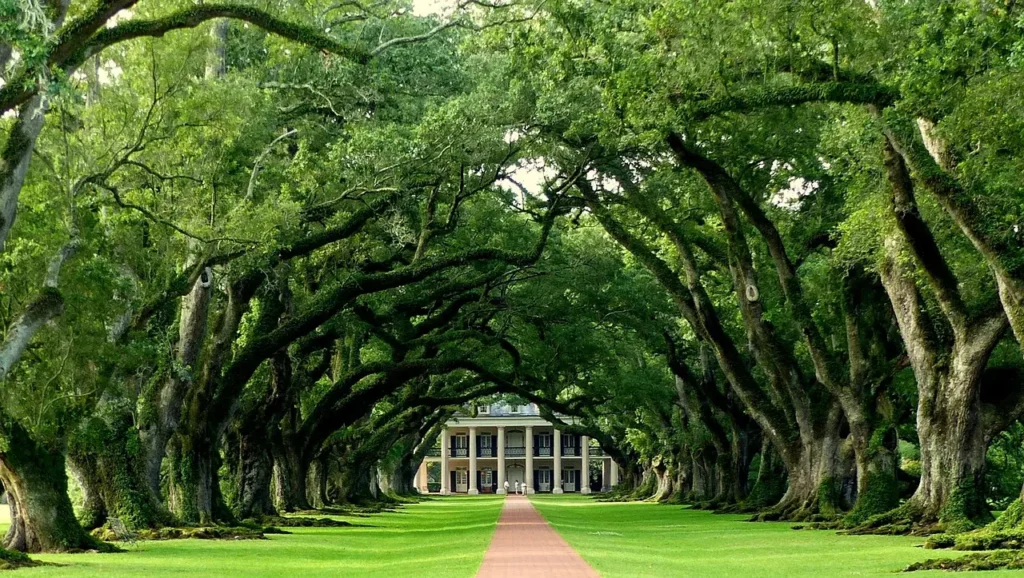
Urban forests provide more than cooling cities and cleaning air. They’re key in how water travels through a city — an extremely important factor when you live in Louisiana and face the threat of flooding and torrential downpours. When it rains on streets and roofs, the water can’t absorb into the earth. This water — called runoff — moves quickly, sweeps up pollutants and litter, and can overwhelm storm drains and waterways until they flood. Urban forests decelerate this process.
Trees catch rain on their leaves, branches and trunks. This prevents a portion of the water from immediately impacting the ground. In a heavy storm, a single mature tree can intercept hundreds of liters of water. When a city has an abundance of trees, they collectively retain a significant amount of rainfall. Less water reaches the ground all at once, so drains and rivers aren’t overwhelmed. This reduces the likelihood of flash floods, which are prevalent in cities with low-lying terrain such as New Orleans.
Tree roots assist as well. They burrow deep into the earth, aerating it and providing rivers of room for the water to seep. This is excellent news for cities, where pavement and buildings cover most of the ground and rain has nowhere to run. When roots aerate the soil, they assist with retaining water in the earth, preventing streams and rivers from flooding in storms. In clay or drainage-poor areas, tree roots can increase land percolation. That’s why bioswales, shallow ditches packed with plants, are frequently lined with strength-rooted native plants and shrubs. They decelerate and filter rain on its journey, allowing it to infiltrate rather than flow away.
Urban forests can trap and filter out stuff like oil, trash and chemicals that rain snatches up off streets. When water meanders through leaves, soil and roots, many of these pollutants are trapped on their way to lakes and rivers. This aids in keeping water cleaner for all, especially in cities that depend on rivers and lakes for drinking water. There’s a strong connection between stormwater quality and public health, especially after such major storms as Hurricane Laura, which brought with it flooding and pollution.
Some stormwater management projects in Louisiana use urban forestry as a core part of their design:
- Detention basins that allow water to percolate into the ground, or slowly release into pipes, within approximately 48 hours.
- bioswales planted with native grasses and shrubs that hold and filter rainwater
- Urban greenways and parks, rich with trees to catch rain and slow runoff.
- Hybrid systems in low-lying areas like New Orleans, where gray pipes and green space go hand in hand for flood management.
- So, street tree planting programs that increase canopy cover and road runoff.
- ‘Rain gardens’ in public spaces that use plants to absorb and filter stormwater.
- Restoration of wetlands on city edges to buffer floods and filter water.
Green infrastructure–such as urban forests–can prepare cities for the larger storms and rising seas associated with climate change. They cooperate with rather than combat pipes and pumps — to deal with water intelligently and adaptively. To protect people and property, protect clean water, and ensure resilience in the face of storms.
Economic and social impacts of urban forests
There is more than just cleaner air and cooler streets to urban forests. They provide tangible economic and social impacts in Louisiana’s urban forests. Studies indicate that homes in the vicinity of meticulously maintained green areas can experience an increase in value of up to 10-20%. So a family living adjacent to a city park or tree-lined street can enjoy a tangible increase in the value of their home. This occurs as folks want to live near nice, shaded spots, and purchasers will pay more. It’s not just for homeowners. Local governments can collect more in property taxes where urban forests are well managed — taxes which can go back into public services that help everyone.
Urban forests open the door for new jobs, too. Tree-planting efforts and maintenance crews require many hands. There’s jobs for those who plant saplings, prune branches, and maintain tree health. Urban forestry management creates jobs for planners, arborists, and those monitoring tree health and growth. In areas such as Louisiana, these jobs can bolster local economies where other employment is scarce. In addition to that, urban forests save cities money. They reduce stormwater runoff, so urban areas incur less expenditures for water treatment and flood management. Less hospital visits for heat-related illness and asthma save health care costs.
Health is yet another area where urban forests have a big impact. Or in other words, clean air from trees = less people getting sick from inhaling dust or pollen. There’s compelling proof that increased tree cover in an urban environment correlates with less incidents of asthma and heat stroke, particularly in hotter months. Another study discovered that when a neighborhood’s tree canopy increased by 25%, residents measured their anxiety and stress one point lower on a five-point scale. That’s no minor difference–it means that people actually feel better. Urban forests combat obesity by providing residents with safe, shaded locations to be physically active. For kids, being raised around green spaces results in enhanced memory and attention, enabling them to perform better academically.
Urban forests unite people, as well. In Louisiana, a handful of community programs aid in transforming green spaces into places for all. Here are a few ways these spaces build social ties:
- Outdoor fitness programs and group walks in city parks
- Community gardening projects led by local volunteers
- Environmental learning sessions for children and adults
- Festivals and public events held under shaded tree canopies
- Citizen science projects where people help track tree health
Urban forests can do their part to address environmental justice. They provide every resident–regardless of location–with access to refreshing, sanitary and secure outdoor areas. This assists in bridging divides between neighborhoods that may not have had the same resources historically. Regardless of background, individuals can benefit from the mental and physical health advantages, and the feeling of unity associated with communal spaces.
Community engagement and collaborative action
Louisiana’s urban forests provide more than just green to our city streets. They clean the air and cool neighborhoods, but these transformations only function when individuals do. Volunteer-run tree planting and stewardship programs are the lifeblood of many urban forestry initiatives. Groups here in Baton Rouge and New Orleans have established regular tree days. Neighbors of all ages come together to dig and plant and nurture new trees. These programs provide a source of pride and ownership for the individuals. When communities tend and guard saplings, survival rates increase. Small actions, such as organizing neighborhood tree care teams, make these initiatives more sustainable. Volunteers frequently collaborate with city personnel to select the appropriate mix of tree species, ensuring they are adaptable to local climate and soil conditions.
Collaborations are essential to maintain urban forests in good shape. Local governments play a big role by providing support and financing, but they can’t do it alone. Nonprofit groups contribute knowledge and extend our reach. When city officials, nonprofit and residents come together they exchange skills and ideas. In Shreveport, for instance, a city-nonprofit collaboration resulted in the planting of thousands of trees along busy streets and in parks. Residents assisted in mapping areas lacking trees and city employees took care of the permits and logistics. This team sped up planting and helped the trees thrive. We held weekly meetings and maintained open communications to keep everyone in the loop.
Education ampltifies the effect of these initiatives. Folks are more inclined to back urban forests when they have the facts. Awareness efforts can range from in-school programs to easy to access web tutorials. In Lafayette, schools team up with local tree organizations to educate children on the importance of trees— cleaner air, providing shade and minimizing noise. Other cities established information booths at markets or hold social media campaigns. These initiatives enable individuals to recognize the connection between tree cover and reduced temperatures, which is crucial in regions with extended, scorching summers. Awareness mitigates issues such as tree damage during construction or poor pruning. Providing them with simple instructions on tree care increases the chances that trees will survive to maturity and provide long-term benefits.
Active community groups and their urban forestry initiatives
| Community Group | Location | Key Focus | Notable Initiative |
| Baton Rouge Green | Baton Rouge | Urban tree planting, education | Citywide tree mapping and care workshops |
| SOUL NOLA | New Orleans | Reforestation, community outreach | Neighborhood reforestation project |
| Shreveport Green | Shreveport | Riverfront and street tree care | Urban heat island reduction program |
| Trees Acadiana | Lafayette | School-based education, planting | Tree adoption and youth education events |
Challenges and future opportunities in Louisiana
Urban forests in Louisiana contribute significantly to cleaner air and city cooling, but they pose some daunting challenges. Pests and diseases are imminent dangers. Emerald ash borer and oak wilt can run through tree stands quickly killing many trees. These outbreaks kill trees and dead wood, which not only looks ugly but reduces trees’ ability to offset pollution in the air. Sick trees can’t shade streets or cool neighborhoods as effectively. In areas where pest outbreaks are severe, city workers have to allocate extra time and resources to replacing and removing dead trees. This impedes reforestation.
Climate change is a major concern for urban forests here. Louisiana’s weather is heating up and storms are hitting even harder. Severe storms can topple entire forests at a time – stripping streets bare and exacerbating heat islands. Hotter days increase the trees’ thirst, but droughts and watering restrictions can stunt growth. Certain tree species that once thrived in Louisiana may not weather the new heat or more brutal storms. This means cities have to consider what tree species are going to thrive as the climate continues to change. Selecting trees that survive both flooding and drought is a new challenge.
Funding impedes growing and caring for urban forests. Planting and caring for trees requires more than good intentions. Cities are strapped for cash and may prioritize other needs over tree care. Purchasing saplings, employing skilled professionals, and maintaining pruning and pest management all require expenses. When funds are lacking, tree projects stall. Some cities circumvent this by collaborating with community organizations or soliciting assistance from local businesses, but this doesn’t always plug the hole. Without stable financing, even the finest intentions can sputter.
It’s going to take long-term planning and strong policies for Louisiana’s urban forests to have a bright future. Trees take years to grow and require attention their entire lives. Short-term projects might plant many trees at once, but without a strategy for sustaining these trees, many will not survive. Policies that protect old trees and green spaces help cities retain the benefits of urban forests. Other cities have begun to codify tree rules into local ordinances, making it more difficult to fell mature trees or construct on green land. These actions contribute to securing urban forests’ continued presence in city life for decades.
To help manage these problems, new tools and smart ideas are being tested in Louisiana:
- Leveraging satellite data and mapping apps to monitor tree health and identify pest outbreaks early
- Planting tree species that can tolerate wet and dry weather
- Experimenting with soil treatments that assist trees in absorbing more moisture during dry spells
- Organizing volunteer teams to nurture newly planted trees
- Working with local schools to educate children about maintaining trees and air quality
- Providing mini-grants to neighborhoods to begin tree planting on their own