
Sustainable solutions for canopy protection through responsible forest management
19 June 2026Understanding responsible forest management principles
Responsible forest management is about nurturing forests to remain resilient and valuable to humans and the environment for generations to come. It’s not about short term gain, but maintaining forests so that tomorrow’s children have the same, or better, resources and benefits as us. These principles apply to forests everywhere, from tropical rainforest to temperate woodland.
Being sustainable is the core of this concept. It’s about harvesting no more than the forest can regenerate. For instance, selective harvesting allows for some trees to be harvested while others mature. This may appear like what occurs in the natural environment, like small areas opened up by storms or fires. Foregoing clear-cutting on a grand scale, forest managers sustain the balance of the ecosystem. This not only maintains soil vitality and prevents erosion, but safeguards watersheds and wildlife habitats. Forests provide key ecosystem services—including clean water, carbon storage, and habitat—that researchers estimate to be worth $33 trillion annually. When forests are responsibly managed, these services continue to serve all of society.
Biodiversity conservation is yet another key principle. They house thousands of plant and animal species — all contributing to the ecosystem. Management plans have to safeguard this diversity. That is, leaving sufficient mature trees for birds and insects, fallen logs for fungi, and habitat for rare species. It means honoring Indigenous rights and wisdom. They frequently understand responsible forest management principles. When people control their own forests, tree felling plunges by 20%, research indicates. It illustrates how local stewardship can keep forests healthy.
Keeping forests healthy is more than planting trees. It’s about pest surveillance, fire prevention where necessary, and ensuring that forests can bounce back from natural shocks. With 5.6 million hectares of forest lost annually, these actions are crucial. Illegal logging and rogue deforestation cause genuine harm by reducing the world’s carbon sinks and emitting greenhouse gases. Compliance with the law and certified forestry are modest measures toward halting this loss.
Being aware of sustainable forest management concepts. Its objectives could be to increase wildlife populations, enhance water quality or augment forest coverage. These objectives need to be quantified over time. For example, monitoring bird species counts or stream health indicates whether management is effective. On the international front, certifications like those from the Forest Stewardship Council ensure these methods maintain the same high quality across the board. Applying these best practices fosters trust and allows forests to continue providing their numerous benefits.
Identifying and addressing threats to the canopy
It is the uppermost protective layer of forests and urban greenery, modulating microclimate and hosting diverse ecosystems. Its well-being is connected to our own air, water and climate stability. To maintain this stratum is to attend to its natural and anthropogenic enemies, particularly in urban settings where conditions are often harsh for trees.
- Climate change: rising temperatures, unpredictable rain, drought, and storms
- Deforestation and land-use change: clearing forests for farms or buildings
- Pests and diseases: invasive insects and pathogens
- Poor maintenance: neglect or improper care, especially in urban settings
- Pollution: air and soil contaminants
- Fragmentation: breaking up forests into smaller pieces
- Transfer of tree care to property owners: inconsistent upkeep and loss of benefits
Early detection and rapid response are the most important in halting the greatest threats. Threats to the canopy – pests and diseases – can spread fast, without warning, so it pays to establish systems that detect changes early. With trained staff or even digital tools, local crews can monitor tree health, notice early stress signals and intervene before issues escalate. For instance, urban foresters in San Francisco monitor for pest and disease outbreaks, using a combination of in-field inspections and remote monitoring through sensors. If a problem arises, teams can prune out infected branches, treat trees, or briefly remove impacted trees to prevent spread. This sort of swift reaction reduces danger throughout the canopy.
It simplifies typing slow changes. Basic tools like satellite photos, drones, or field surveys can aid in mapping canopy cover changes, identify gaps, and monitor tree growth. Cities can leverage this information to design new planting locations, select resilient species, and evaluate whether previous interventions are effective. In cities like San Francisco where you can’t just plant new trees, monitoring green roofs or wall gardens identifies how cover is being innovatively added. Routine checks furthermore indicate whether the transfer of street tree care to property owners is damaging the health and safety of these trees, bolstering demands for more coordinated, city-led care.
Restoration is more than planting trees. It’s about assisting wounded terrain heal and ensuring new growth serve local necessities. In cities, that might translate into greening empty lots, walls or roofs, particularly where roots can’t dig deep. Rehabilitation efforts involve deweeding invasive species, planting native species, rebuilding soils, and establishing corridors allowing fauna to migrate. Sustainable forestry in the countryside—such as selective logging or source water protection—maintains forests in good condition for the long term. These shield carbon reservoirs and water supplies and ecosystems for numerous organisms.
Integrating ecological, economic, and social priorities
Harmony of forests, people and economy is sustainable forest management It’s about seeing forests as more than just trees–they provide homes for plants and animals, sources of employment, and hold cultural significance for numerous communities. When these three sides—ecological, economic and social—are working together, our forests stand a better chance to flourish for the long term. The table below breaks down these core priorities:
| Priority | Ecological | Economic | Social |
| Focus | Biodiversity, carbon storage, water supply | Local jobs, products, long-term profit | Equity, rights, cultural value, livelihoods |
| Value | Healthy habitats, less carbon loss, clean water | Sustainable timber, non-timber goods, stable income | Inclusion, fair share, respect, well-being |
| Action | Protect wildlife, restore canopy, guard soil | Use certified logging, add value on-site, diversify | Include locals, respect Indigenous rights, share decisions |
Sustainable harvesting, one way to bolster local economies By harvesting no more than the forest is able to return, forest managers help maintain the flow of wood and non-timber products for years—not just a season. For instance, mini sawmills or artisan groups that utilize certified wood or forest materials can market furniture, baskets or oils. These value-added products frequently earn more than logs. This reliable income can do a lot for families and entire communities, particularly in regions where work is scarce. Forests remain healthy and continue sequestering carbon, slowing climate change. Studies indicate forests treated this way can increase carbon stocks up to 17 percent per rotation.
For me, working with people who live near or in forests is equally important. Indigenous and local communities often know the land best. Research indicates that when Indigenous peoples have legal rights to govern their own forests, tree loss declines approximately 20% and biodiversity safeguards improve. Indeed, Indigenous peoples protect approximately 80% of biodiversity worldwide. Their traditional knowledge, if honored and harnessed, results in wiser decisions for humans and the environment. Including all stakeholders—locals, workers, businesses, and governments—means goals are more likely to match what everyone needs: healthy forests, water, and stable jobs.
A smart forest plan sees the whole. With multi-use management, a forest can yield many benefits at once—timber, clean water, food, fuel, or even opportunities for education or ecotourism. So no one use—like logging or farming—dominates. For instance, certain forests are arranged such that parts are wild, parts are lightly logged, and a third are used for non-timber products like nuts or honey. This blend isn’t just good for the woods—it helps keep forests standing, wildlife safe and local communities strong. It aids in decelerating the destruction of the 5.6 million hectares of forest lost annually and ensures that forests can continue to nourish both humanity and the earth.
Leveraging community knowledge and participation
A canopy that’s truly strong leans on more than science and policy, but on community — the communities living in or adjacent to forests. Local communities have key knowledge and are stakeholders in maintaining forest health. Drawing on their input, skills and traditions makes your forest management plans more practical and equitable for all involved.
- There are a number of ways to engage local communities in decisions. Forest management boards can hold seats open for community members, ensuring their voices mold policies from the ground up. With community mapping projects, locals can identify critical locations – such as water sources, sacred groves or wildlife corridors – for protection, rather than omission. Participatory budgeting leverages community knowledge and involvement by putting some resources directly into community hands, letting them spearhead minor projects such as firebreak creation or seed nurseries. In certain areas, villagers, councils or cooperatives convene and vote on logging limits, replanting schedules, or use rules. To function optimally, these communities require defined roles, equitable polling, and frequent assemblies. In Indonesia, for instance, non-profits partnered with forest villages to establish collective decision-making councils that evaluate land use plans and approve permits, supporting a reduction in tension and illicit clearing.
- Traditional ecological knowledge is transmitted in stories, chores and practical skills. This type of knowledge includes plant seasons, fire cycles, animal tracks, and identifying early symptoms of tree disease. For example, certain Amazonian tribes employ their own rain and soil calendars to select the most optimal planting period or to spot exotic birds. In Canada, First Nations elders direct fire management by reading scarred old burns and understanding which plants reappear first. This folk wisdom can fill in where the scientific data is sparse or not local enough. Working with elders or adept gatherers, forest managers can combine modern tools with time-tested knowledge. This keeps management grounded and makes it less likely to make errors that don’t suit the local context.
- Capacity-building programs empower local people to take a greater role in managing forests. Training workshops might cover how to identify pests, use GPS, or operate tree nurseries. Other initiatives teach fundamental legal rights, so locals understand how to defend their territory when foreign firms encroach. Scholarships or work swaps enable them to gain forestry expertise, but stay local. In Uganda, women’s groups received training on honey harvesting and tree planting, and then passed on that knowledge to their neighbors, increasing both income and tree cover. These programs work best when they speak local needs and use languages people know well.
- Open lines of communication are the adhesive that binds these initiatives. Open meetings, radio updates, and signage in public areas keep everyone informed. Feedback boxes or regular check-ins by trusted leaders give people a method to share concerns or report issues. An online platform or a barebones txt message app can connect remote villages with forest officials or partners. In Nepal, the community forest groups post harvest plans and spending reports on bulletin boards, so all members can observe what’s going on. This engenders trust, assists in addressing problems early, and maintains plans on course.
Applying innovative and adaptive management techniques
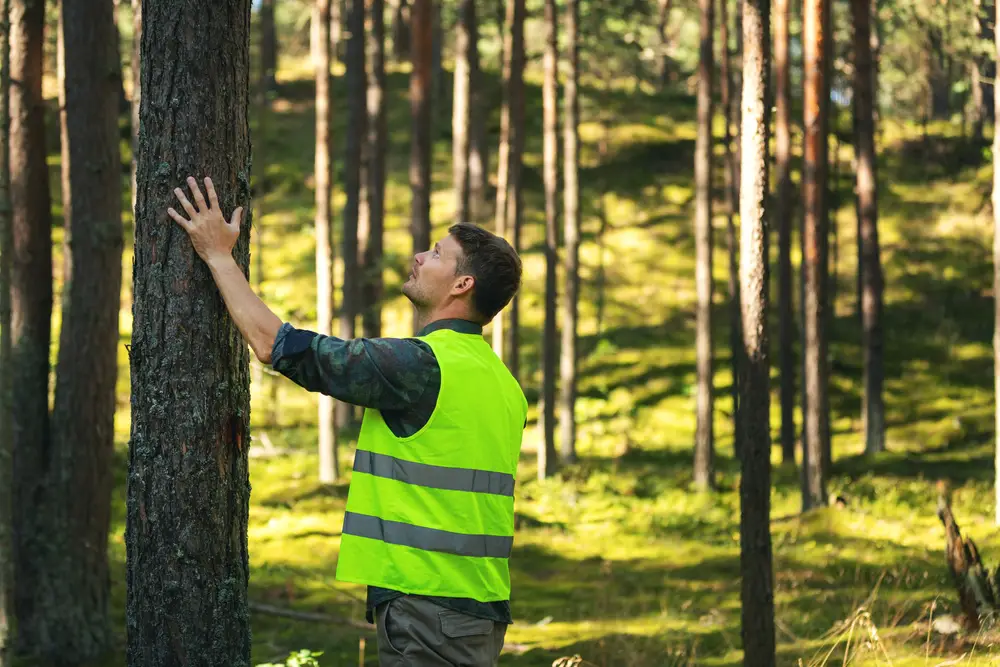
Sustainable forest management involves innovative and adaptive management approaches. Protecting the canopy requires more than a single set approach — it’s about selecting and combining strategies that fit various locations and priorities. To maintain healthy forests, support wildlife, and sequester carbon, management needs to adapt to emerging challenges, such as climate change, and employ techniques that benefit both humans and the environment.
- Try climate-smart forestry, which adapts tree planting, thinning and harvest schedules to current and projected climate data.
- Utilize remote sensing and data analytics to monitor forest health and detect threats, such as disease or illegal logging, quickly.
- Pioneered controlled burns and mixed-species planting to increase canopy diversity and resilience to pests and storms.
- Use selective logging to preserve mature trees and canopy cover, assisting wildlife and soil simultaneously.
- Reserve conservation blocks in managed forests, providing space for rare species and sensitive habitats to rebound.
- Use feedback loops — gather field data, conduct regular reviews, & adjust plans as new info arrives.
Adaptive management is at the core of contemporary forest stewardship. That is, establishing operational objectives, conducting piloting of innovation ideas and implementing improvements by learning from success or failure. For instance, the Oregon Department of Forestry’s Forest Practices Act implemented replanting mandates, demonstrating how legislation can drive sustainable forestry. By taking cues from on-the-ground outcomes, managers can identify issues early and change their approach. Adaptive management, research indicates, can increase carbon stored in forests by as much as 17% over a complete cycle, supporting both climate and business objectives.
Experimenting with novel, adaptive silvicultural practices is critical for canopy resilience. Mixed-species planting, for example, distributes risk—if one variety of tree falters, others step in. Controlled burns replicate natural fire cycles, clearing out undergrowth and allowing sunlight to reach young trees, which maintains a healthy canopy in the long term. Climate-smart forestry pushes that principle to the next level by aligning tree selections and management strategies with local climate projections, ensuring that forests can adapt as conditions evolve. Remote sensing — with satellites and drones — provides managers real-time information so they can intervene before minor issues become major. These capabilities assist in monitoring forest growth, detecting tree loss, and even quantifying carbon stored in trees and soil—an important factor in climate efforts as dry tree biomass contains roughly 50% carbon.
Feedback loops allow managers to learn and adapt. By verifying outcomes and collecting feedback from indigenous groups, researchers, and commercial associates, strategies remain timely and equitable. Ecological forest management is about more than trees—it balances social, economic and environmental demands. By maintaining low deforestation levels and protecting the canopy we’re not only helping biodiversity but supporting all those who depend on the forest’s resources. When managed with both people and nature in mind, forests can continue to give for generations.
Promoting sustainable production and ethical certification
Sustainable production and ethical certification influence how forests are managed and utilized, benefiting both humans and the environment. These measures are about more than just saving trees. They support fair labor, vibrant local economies and the rights of Indigenous Peoples who have nurtured forests for generations. They keep forests standing and healthy, which in turn helps slow climate change and save rare animals.
- Benefits of certification schemes
Certification schemes, such as those of the Forest Stewardship Council (FSC), deliver genuine benefits. They provide consumers and traders with assurance that timber and other forest products are sourced from compliant areas. Certified forests remain forests, not farmland or mines. They’re frequently carbon sinks, absorbing carbon that would otherwise warm the earth. Certified businesses often extend to worker protection. For instance, workers in certified sites are 4x more likely to have safety training. Certain certified groups provide periodic health checks and treatment of wounded workers. Besides, certified wood can command a premium of as much as 50%. It gives a lift to local economies and to those who maintain them with high standards. In Africa and Asia, certified forests better protect wildlife like great apes and other mammals than uncertified areas. These schemes support Indigenous Peoples’ rights, as there are numerous regulations that involve their input on forest management. With Indigenous Peoples safeguarding approximately 80% of global biodiversity, their role is crucial.
Education helps producers and shoppers alike to appreciate the importance of certified products. Producers are taught improved methods for treating forests, maintaining their health and caring for the workers there. They realize that compliance can unlock new markets and increase margins. Shoppers become aware that purchasing certified products supports fairness in wages, workplace safety and sustainable forestry. This type of education builds confidence and simplifies smart decisions for all.
Traceability systems, for example, are tools that follow goods from forest to shelf. These systems ensure that what’s in the store is what it says it is–no mix-ups or false claims. They utilize codes, barcodes, or digital records to track each stage. It transparentizes the supply chain. From buyers and sellers can view where products originate, halting illegal logging and fraud. It assists in identifying vulnerabilities and addressing them quickly.
Businesses usually require a nudge to achieve or outpace sustainability objectives. Rewards take all shapes and sizes. Some, of course, are price incentives, such as the premium for certified timber. Others are tax breaks or grants or public praise for blazing a trail. These incentives assist companies in absorbing the expense of enhanced education, new equipment or auditing. Eventually these moves pay off—not only in money but in a more robust, equitable and environmentally conscious business.
Learning from real-world examples and emerging trends
Forests have big challenges with deforestation, soil erosion, invasive species and climate change. Each year some 5.6 million hectares of forests disappear. This damages the ecosystem, native communities’ ways of life, and the globe’s well-being. We can learn from what has and has not worked, and by monitoring emerging trends we can identify clever ways to preserve forest for the future.
| Case Study/Region | What Was Tried | Results/Outcomes | Lessons Learned |
| Amazon basin, Brazil | Community-led monitoring with remote sensing and LiDAR | Lowered illegal logging by 25% | Tech plus local action is effective |
| Borneo, Indonesia | Assisted natural regeneration for degraded land | Forest canopy cover up by 30% over 10 years | Letting nature lead can speed recovery |
| Central Europe | Strict timber certification and science-based policies | Higher soil carbon storage, more native trees | Policy must match local needs |
| Eastern Africa | Fast-growing monoculture plantations | Short term gain, long term biodiversity loss | Diversity matters for lasting health |
| North America (Pacific NW) | Selective logging, old-growth protection | Biodiversity and canopy better preserved | Selective logging can balance needs |
Failed projects provide crucial teachings. In certain areas, single-species tree planting felt like an expedient bandage post-logging. With only a single tree species, forests were vulnerable to infestations and storms. Biodiversity declined, soil deteriorated and forests faded away. Another trap was top down rules that dismissed local feedback. These frequently resulted in friction, bad adherence, or worse damage. Invasive species spread faster where trade and travel increased, revealing that forgetting these risks can reverse years of gains. In each case, not listening locally or missing the big picture caused setbacks.
New trends answer these challenges. Remote sensing and LiDAR now reveal forest health in detail, monitoring shifts in canopy cover, tree height, and biomass. These tools detect illegal logging and assist in mapping where restoration is most effective. Assisted natural regeneration, with individuals removing weeds and safeguarding saplings, is making significant strides. This enables forests to recover at less expense and with greater achievement. Science-grounded evaluations now direct restoration by choosing the underlying causes of harm, not just the manifestations. Policies are changing, too. More countries connect forest rules with climate goals, needing evidence of sustainable use and tougher logging and trade controls.
What works here, doesn’t fit there. Tropical forests require crowdsourcing, instant alerts of illegal activity. Temperate forests might benefit more from selective logging and planning. Invasive species are a worldwide scourge, but the appropriate solution varies according to local species, climate and trade routes. Its crucial to match the solution to the region. Soil carbon storage, for instance, increases by as much as 20% when forests are cared for with local knowledge and science, rather than one-size-fits-all regulations.