
Strengthening urban forests through community and planner partnerships
25 November 2025Why urban forests matter for cities and communities
Urban forests are the heart of city life. They serve as green infrastructure, as critical as roads, pipes, or power lines. There are obvious benefits for those of us living and working in cities – cleaner air and water, safer, more vital communities. As cities expand and warm, these urban forests aren’t simply a luxury; they’re essential.
- Cool city streets and lower heat risk
- Improve air quality by filtering dust and pollutants
- Manage rainwater, cut down on floods
- Give space for play, rest, and social meets
- Raise nearby property values and attract shops and firms
- Help wildlife and native plants live in the city
- Cut noise and give shade
- Support mental well-being and reduce stress
- Grow community ties and pride
- Boost climate resilience and adaptation
Urban forests provide more than just shade. Parks, tree-lined streets and wooded patches are frequently the primary locations where city-dwellers seek relief from concrete. They provide places for a walk, play, or simply sitting silently. Being close to trees relates to reduced stress and improved mood. Research has revealed that those who live near green spaces are more physically active and have lower incidence rates of mental illness. This is crucial in dense cities, where noise and quick motion can slowly grind people down. In these park-sparse environments, every tree-lined street and green pathway can mean life or death to people’s daily experience.
Storms and floods are an actual danger in cities, and urban forests assist with this. Tree roots absorb rain and slow runoff, so less water makes it to streets and drains. This helps prevent floods and keeps rivers purer by intercepting dust and debris before it enters aquatic waterways. When there are more trees in a city, the air feels cooler during heatwaves. Tree shade reduces street temperatures by several degrees Celsius, aiding people — particularly seniors and those who are ill — in coping with heat. Trees sequester carbon, which mitigates climate change, but equally vital, they make cities more resilient to changing weather.
Urban forests financially make sense for the city. Homes near parks and green streets frequently sell for a premium. There are studies that demonstrate how trees can increase property values by 5-15% based on location. Businesses and offices seek out tree-lined properties, as those locations attract more clients and satisfied employees. Robust urban forests reduce city expenses as well—such as cleaning storm drains and treating heat stress in hospitals. These benefits continue for decades because trees are long-lived organisms and return value year after year.
Certain demographics have significantly less access to green spaces, frequently due to income or race. This gap causes the benefits of urban forests not to be distributed equally. Equitable planning and robust community voices are necessary to change this. When neighbors act in concert with city planners, they can advocate for increased parks and street trees, and equitable stewardship of ancient woodlands. Community action – planting days, watch groups, or school projects – can help keep these forests safe for today and the future. The decisions we make today—about where to plant, how to care for, how to protect urban forests—will define city life for generations.
Community engagement in urban forest preservation
Community involvement is a big part of how urban forests stay alive. When citizens of all ages and backgrounds team up with city planners, they bring their own visions and desires. This way we help mold green spaces that function for all. With a healthy diversity of voices from public and private groups and civil society, city forests are more apt to serve real world needs, not just the plans of the few. It fixes the old, entrenched pattern of just a small group — typically the more powerful or wealthier — deciding what went on in urban spaces. That resulted in groups being excluded, and at times, entire regions devoid of green cover. Open, inclusive engagement is the key if cities want equitable and enduring outcomes.
Community engagement can manifest itself in various ways. These are some common ways people get involved:
- Public workshops and tree-planting days
- Online surveys to share feedback on urban forestry plans
- Volunteer programs for pruning, watering, and clean-up
- Neighborhood tree mapping or inventory projects
- School projects focused on tree science and care
- Local events that highlight native plant species
- Social media campaigns to build awareness and support
- Community-led monitoring and reporting on tree health
Bringing diverse groups together to collaborate is equally vital. Cities experience more success when neighborhood organizations, schools and area businesses collaborate. For instance, a business sponsors a planting, a school provides students to assist and a neighborhood association promotes the effort. This type of collaboration not only accomplishes more but fosters community. Schools bring in youth, who are taught to appreciate the trees at an early age. Local businesses, when engaged, demonstrate they care about the health of the entire community. Neighborhood groups tend to know their own spaces’ needs better than anyone, so their input is crucial.
All it takes is a little good communication to keep everyone on the same page. When cities establish open lines—be it forums on the web, newsletters or open meetings—people can communicate their desires or concerns. This back-and-forth allows urban planners to discover what’s most important to the community. Social learning occurs when citizens and government learn from each other, which is critical to good management of the urban forest. When you all talk openly, it’s easier to identify issues, for example, when some want more trees and others are concerned about blocked views or allergies.
When people drive their own projects, acknowledge what they accomplish. Awards and news stories or even minor celebrations can assist. This builds pride and maintains interest. For instance, when a community revives an abandoned park, or locals reintroduce indigenous street trees– it demonstrates what can be achieved when individuals take initiative. These victories serve to inspire other communities and demonstrate that community-based action is effective.
Innovative planning strategies and technology integration
Community and urban planner collaboration for urban forest preservation now depends on innovative planning and smart technology. These changes allowed cities to address current demands while still keeping parks environmentally sound and accessible to all.
- Urban planning has transcended archaic models to blend green infrastructure directly into urban living. Green roofs, bioswales, and pocket parks appear more these days in urban plans. These features have helped manage stormwater, reduce heat, and nourish local wildlife. Most cities incorporate them directly into their planning codes, so new developments have to be green. This shift isn’t just cosmetic. Green roofs reduce building energy use and bioswales prevent heavy rain from flooding streets in many areas. Concentrating on these choices ensures urban forests remain more connected with the constructed environment, not merely reserved as an afterthought.
- Technology tools have become central to forest stewardship and civic engagement. Mobile apps and web platforms allow people to report tree health, pest symptoms, or damage. These reports go directly to city personnel, who can address issues faster than ever. In others, apps allow users to label trees, monitor irrigation or participate in community planting initiatives. This type of tech-enabled feedback loop provides residents with tangible means to assist in caring for their urban forests and keeps planners informed to what’s required on the ground.
- Data-driven decisions are now the norm for planners seeking to preserve or expand city forests. GIS mapping, analysis, and predictive modeling assist cities in identifying locations where new trees are most beneficial, determining which species are compatible with the soil and climate, and tracking how the canopy changes annually. GIS maps provide a street-level perspective, allowing planners to determine where trees are lost and gained over time. Cities around the globe deploy remote-sensing and digital mapping to understand the role of trees on air pollution, shading, and even crime in their neighborhoods. These techniques assist planners demonstrate, in tangible figures, the value of conservation and reforestation. Planners can employ these maps to plan reforestation post-construction or protect riverbanks from erosion with an appropriate tree mix.
- Smart city concepts now inform how urban forests align with broader civic objectives. University reviews find smart cities must mix tech, green ideology and citizen participation. Sensors, cameras and other such aids can not only monitor the health of individual trees but detect hazards such as falling branches, obstructed roadways or inundation. This tech not only helps keep cities safer for all, it ensures that green spaces receive the care and attention they deserve.
Navigating urban development and policy challenges
Urban forests are in a rough place when cities expand rapidly. Planners and local groups often navigate a way that benefits both people and nature. Urban forests aren’t just a catalyst for decelerating climate change – they enable cities to survive heatwaves, floods, and air pollution. We know that more trees = cooler streets and less heat stress for those without air conditioning or quick escape options. Yet carving out space for houses, highways and retail frequently imperils these parks.
| Pros of Urban Development | Pros of Forest Preservation |
| More housing and jobs | Better air, cooler climate |
| Boosts local economy | Reduces heat and illness |
| Improves infrastructure | Supports wildlife |
| Cons of Urban Development | Cons of Forest Preservation |
| —————————- | —————————— |
| Loss of green space | Limits new building |
| Can raise heat and noise | Can slow economic growth |
| Increases pollution | May lead to higher costs |
Zoning laws and building codes provide the base-level rules for what can be built where. If cities are to maintain their trees, regulations need to mandate green space in every development project. In some locations, it’s minimum tree counts per hectare or the need for a certain proportion of land to remain green. These steps leave no doubt—trees are front and center. Once codes and regulations identify tree protection, developers must navigate around old trees and save ground for parks. Over time, these policies construct greener, more balanced cities.
Conflicts arise regularly, because developers want to utilize every inch of space, while neighbors and community leaders want to preserve trees. Mediation can assist all sides in discovering shared footing. City planners have a key part to play here, balancing the demands of expansion with the expense of sacrificing green spaces. Compromise sometimes means preserving mature trees but planting new ones elsewhere. At its finest, it introduces voices from all backgrounds, assisting in resolving inequalities in who receives access to green space. Studies reveal that affluent or white areas tend to have more trees than impoverished ones, resulting in diminished shade and increased health hazards.
Policing urban forestry regulations requires more than documenting them. Cities should have concrete steps to monitor their tree loss, inspect construction sites, and impose penalties for violations. Robust enforcement keeps everyone grounded in the reality that tree loss is not a minor issue—it impacts enduring health and resilience. Academic work supports this, advocating for teams that mix ecology, social science, and policy. That way cities can identify holes, exchange more effective behaviors, and empower communities to defend their own blocks.
Collaborative governance and funding models
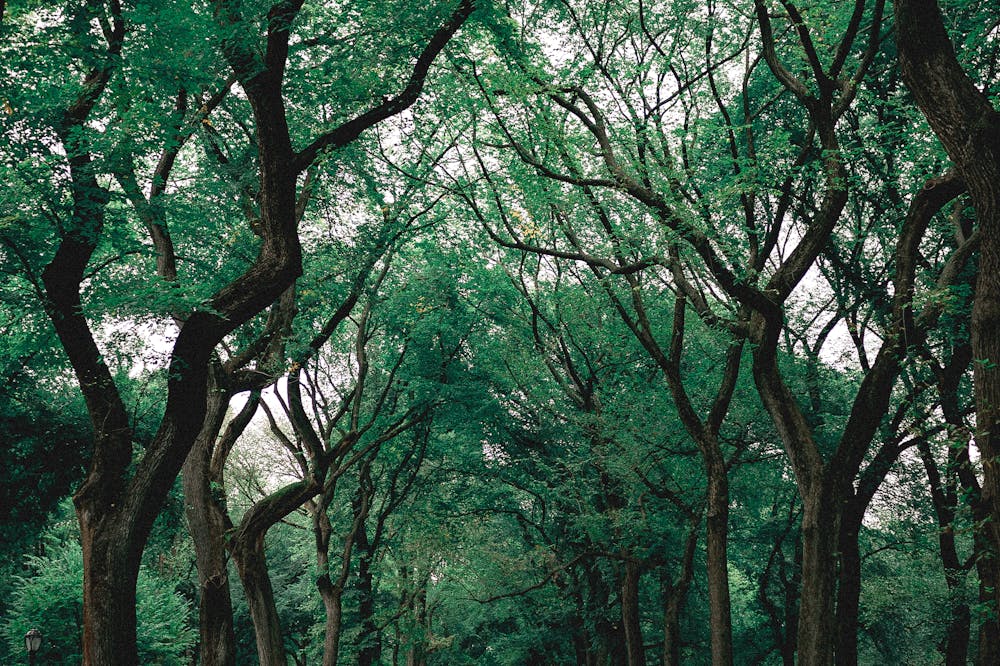
Collaborative governance is an umbrella term for methods that diverse groups—government, nonprofits, businesses, locals—collaborate to manage public problems. When it comes to urban forests, that translates to all of us having a voice in how our green spaces are designed, maintained and enhanced. Such partnerships tend to be most effective when there is trust, stable leadership, and clearly defined roles. Big city agencies as well as small neighborhood groups make joint decisions about planting, maintenance, and long-term care. Urban Living Labs (ULLs) are one such example, where cities pilot innovative concepts for greener spaces, allowing residents, scientists and officials to collaborate side by side.
The backbone of these efforts is cooperation across every step: making plans, putting them in place, and checking how well they work. One major challenge is that city green space plans can be wildly ambivalent, some are specific, others not, so it’s hard to measure what works. Too often, cities struggle to track results because follow-up monitoring and check-ins are absent. This can make it difficult to tell if the collective effort is bearing fruit or if the forest is flourishing.
Money is always a significant part of the equation. Urban forest projects require consistent funding, and it’s frequently from multiple sources. The table below shows some main funding models and sources:
| Funding Model | Source Examples |
| Government Grants | National, regional, or local grants |
| Public-Private Partnerships | Joint city-business projects |
| Community Fundraising | Crowdfunding, local events, donations |
| Nonprofit Grants | Environmental groups, foundations |
| Corporate Sponsorships | Local or global businesses |
Depending on a single stream of funding is dangerous, so groups often mix these options. For instance, a city can secure a grant for new trees, a local business can contribute for signs and benches, and community residents can collect additional funds through event-based fundraising. In many locations, public-private partnerships provide business acumen and funding, and community fundraising generates local pride and ownership.
Shared responsibility agreements are a great practical tool many cities utilize. These are written plans that specify who does what—government teams may manage legal regulations, nonprofits may drive training or evangelizing, and residents could assist with maintenance or promotion. This prevents overlap and ensures each organization is aware of its role.
Giving prizes is yet a different method for maintaining robust urban forests. Others cities operate incentive programs, providing tax breaks or public recognition to businesses or landowners who plant or assist with caring for trees. These rewards can be as trivial as small grants, free tools, or being mentioned in city newsletters, but they accumulate and keep people involved.
Knowledge sharing is a highlighted among long-term care. When people understand the importance of urban forests and the ways to contribute, they’ll be more inclined to participate, detect problems early, and spread solutions. That distributes expertise and maintains the entire ecosystem robust.
Equity and inclusion in urban forestry initiatives
Urban forestry works best when all voices are included in the process. Equity and inclusion isn’t just planting trees everywhere. It’s about equity, eliminating barriers, and ensuring that everyone enjoys the fruits. Urban forests can bring cleaner air, cooler streets, and stronger communities – but not everyone has equal access to this green infrastructure.
A good equity checklist for urban forestry begins with who participates. Planners and civic groups need to engage everyone, not just the most vocal or engaged. That is, welcoming individuals from every neighborhood and income level and background. It’s important to seek out groups and ask what they need from greenspaces. Some might desire shade while strolling, others require playgrounds, and some depend on these spaces for communal events. Real engagement actually asks people what matters to them, listens, and acts on it. Civic actors, such as local environmental groups, tend to play an important role in bridging planners and the community and can advocate for more representative change.
Access is more than just living near a park. There are frequently unseen obstacles. Urban forestry meetings can be difficult to attend–both in terms of location and timing. Providing information and events in multiple languages is progress. Whether online meetings, short videos, or easy flyers—varied formats open participation to more folks. When planners meet people where they are, like at local festivals or schools, more voices get heard. It’s particularly significant in cities with segregationist pasts, where green space is not equitably distributed among neighborhoods. Context-specific and historic research helps illuminate these patterns, striving toward what some call “abolition ecology”—a method of disrupting old cycles that excluded folks.
Monitoring the distribution of trees and greenspaces throughout a city is essential for equity. Some locations were lush with trees and cool shady streets. Others have little, leaving residents vulnerable to heat and polluted air. Maps can help reveal these disparities. Beyond statistics, there’s a necessity to dig deeper to confront root causes, such as historical policies, racism, or historic land use. It means going beyond measuring tree canopy and actually asking questions like who gains and who is left out. Post-distributive justice asks us to go beyond merely distributing trees equitably. It’s about addressing fundamental problems and ensuring that new efforts aren’t reinventing the wheel.
To individuals, trees represent a whole range of different things. Some may have loved the shade and aesthetic. Some others are concerned with roots in pipes or falling branches. These perspectives can conflict, but they provide opportunity for collaboration. Involving parks departments, nonprofits, and neighbors lets more ideas emerge and creates better, enduring outcomes. Researchers advise using interviews, focus groups, and mapping exercises to find out what people think and feel about trees. By combining approaches, planners can collect vivid narratives, not just statistics, and design interventions that meet genuine demands.
Measuring impact and sharing success stories
We track what comes of communities and urban planners working together in this way, sharing success stories to demonstrate real change and help inform future efforts. Straightforward metrics make it easy for all of us to know if urban forest projects are effective. To capture the complete impact, teams consider forest health, tree cover by region, and community engagement. Canopy cover, for instance, is simple to measure with satellite imagery or drone photography. It displays whether the tree count is increasing or decreasing. They set targets, such as achieving 30 per cent land cover in a city with tree canopy or planting new trees every year. These objectives are usually linked to larger objectives, like cleaner air or more shade on hot days.
Data collection aids in telling us if urban forests are more than just eye candy. Air quality sensors indicate whether increased trees equal decreased pollution. Temperature measurements in tree-rich and tree-poor zones may demonstrate if new plantings help cool neighborhoods. Monitoring bird, insect and plant species pre and post planting provide indicators of increasing biodiversity. To make these steps work, projects typically recruit volunteers from the community to count trees or take air readings or log wildlife sightings. This hands on work can even begin with a small handful of passionate folks who live in close proximity. Over time, these endeavors exhibit distinct patterns. As an example, one city in India discovered a 2°C decrease in average summer temperature in neighborhoods where tree planting was combined with long-term maintenance.
Community voices count throughout. Surveys and “Ward Walks” — group walks through neighborhoods — allow residents to identify locations that may require additional trees or attention. These public acts both raise awareness while providing planners with immediate feedback. Whether it’s helping select which trees get planted or watering new saplings, when people get involved, the trees stand a better chance of living. This shared labor fosters pride and belonging. Most urban forestry workers report that their own lives and careers were transformed for the better by these experiences.
Global stories of impact demonstrate the power of possibility. In Melbourne, residents and planners collaborated to monitor urban forest health with digital mapping and annual reports. In Nairobi, volunteers conducted neighborhood tree counts, assisting planners in establishing new canopy targets. In Toronto, air quality got better in areas where tree objectives were transparent and local citizens were involved in the design. These get shared as impact stories in local news or annual reports, or perhaps even in rudimentary dashboards tracking progress with charts and images. Sharing these results builds trust and keeps people energized. It ties local efforts to global goals like combating climate change, halting biodiversity loss, and creating healthier cities.