Threats to the canopy: logging impacts on forest ecosystems and regeneration
25 April 2026Drivers of logging activities across regions
Logging drives much of the world’s forests, and its drivers differ across regions. More often than not, economic forces push logging pace and scale. With timber prized for export and domestic markets, logging provides a reliable income for companies and workers. Local employment in isolated areas is at stake with these forests. In regions with tough agriculture or limited employment, logging for lumber, pulp or firewood frequently emerges as the primary source of income for households. While the timber export rates vary from one country to the other, they ALL view logging as a means of stimulating their economy. For instance, in Southeast Asia and Central Africa, persistent demand for hardwoods from global markets sustain high logging levels.
Government policies and land tenure systems influence the course of logging. In certain regions, explicit regulations ensure logging is sustainable. Across most regions, poor enforcement allows unsustainable or even illegal logging to occur. In areas where land rights are ambiguous, forests tend to be under greater strain as individuals can encroach and log with less scrutiny. In the Brazilian Amazon, for example, forest degradation from logging is already over 20%, and the Arc of Deforestation demonstrates the damage policy holes and lax enforcement can do to such a huge swath of territory. Even with regulations in place, much of the timber concession is not sustainable and logging is still responsible for a small but significant amount of cleared land – 0.7% in parts of Brazil.
Legal and illegal logging operations both matter but look different in various types of forests.
Drivers: Logging, across regions
In the tropics, illegal logging is rampant, often exceeding legal harvesting. Poverty and demand for wood make these activities easy to start. In temperate and boreal forests, the majority of large-scale logging is legal, but that doesn’t necessarily mean it’s sustainable. In certain boreal regions, for example, industrial logging can raze massive spans, with millions of acres lost annually. Even though legal activities may play by more rules, they still can alter forest structure and species composition. Selective logging, for example, is a main driver for very large tree communities (DBH ≥110 cm), accounting for nearly 89% of the variation between unlogged and logged forests. If we consider only larger trees (50–110 cm DBH), it explains around 72% of the change, but the influence falls for medium-sized trees, explaining just 7.5% of their community variation.
Infrastructure expansion, whether new roads or new settlements, makes pristine forests accessible to loggers. When roads get put in, virgin territory becomes more accessible, accelerating both licit and illicit harvest. This is the case in much of the tropics, where new highways carve through jungle, delivering loggers and settlers. With it, the expansion of settlements further strains regional ecosystems. Distance matters, too—geographic spread accounts for more than 77% of difference in tree communities between logged and unlogged plots, demonstrating how logging and access are shaping forests even far from main roads.
Environmental impacts on canopy and biodiversity
Selective or clear-cut logging alters the forest canopy in more ways than just the removal of tall trees. When the canopy goes, the forest floor loses its protection from sun and wind. This results in higher daytime heat and lower humidity, which alters the microclimate. Shade-loving flora and fauna get stressed, or they disappear. For instance, amphibians requiring cool, wet micro-sites may disappear once logging exposes the forest. A 2023 study revealed that local rainfall in the Congo could decline by as much as 10 percent by 2100 as a result of persistent deforestation. When the microclimate shifts, it sets off a domino effect, altering the entire ecosystem.
Logging injures biodiversity on multiple fronts. Selective logging — which extracts certain species of trees only — may sound innocuous but induces habitat fragmentation. Forests get broken up into fragments. Species requiring large, contiguous tracts, such as large birds, monkeys or certain insects, struggle to survive or migrate. Clear-cutting exacerbates this issue by removing massive areas all at once. It obliterates hundreds of kilometers of tree roots and understory plants, shattering the web of life that sustains forests. So many forest creatures rely on each other. When this web unravels, certain flora and fauna vanish permanently.
The disappearance of keystone species—those with outsized roles—triggers even further modifications. Fruit bats and large birds, for example, distributed seeds across long distances. If they leave, less saplings come back. This delays forest regeneration and opens the door to invasives. Other examples are fungi and insects that decompose dead wood and recycle nutrients. Without them, soil quality plummets, and the entire system has a difficult time regenerating itself. The loss of keystone species disrupts food webs and crucial services such as water filtration, carbon sequestration, and climate regulation.
Forests with logging pressure encounter additional vulnerabilities, rendering them less capable of rebound or resistance. Four main points highlight their growing vulnerability:
- Invasive species gain ground: Open gaps and disturbed soil provide fast-growing weeds and pests a stronghold – crowding out natives.
- Fires spread more easily: Dry, sunlit areas and leftover debris raise fire risk, turning logged forests into tinderboxes.
- Soil washes away: The loss of roots and canopy means rain hits bare ground, leading to erosion, landslides, and muddy rivers.
- Waterways suffer: Clear-cutting riversides deposits silt and nutrients that can choke fish and degrade drinking water.
Tree cover alone is not the whole story. Certain ‘logged’ forests may appear green from the canopy, but the fauna within is either diminished or eliminated. Gold and coal mining, particularly in Brazil and Indonesia, piles on the pressure by razing land and contaminating water. In the period between 1990 and 2020, 420 million hectares of mostly tropical forest vanished, with an additional 10 million lost every year. It’s an environmental impact on canopy and biodiversity.
Social and community consequences
Logging does more than transform the land. It influences the lives, the cultures, the health of communities at home in forests. Canopy loss impacts communities in ways that tend to outlive the trees.
When forests are logged, Indigenous peoples and local communities can be displaced. Many have inhabited these regions for centuries, utilizing the forest for sustenance, hydration, and refuge. To lose access to these resources is to lose more than a place to live. It can translate into lost employment, livelihoods and even identity. Such displacement is frequent where forest rights are weak. As forests dwindle, some communities are displaced and others forced to relocate to congested urban centers. This rapid change can stress city housing, schools, and hospitals. It’s not just about deforestation—it’s about transforming lifestyles, sometimes irreversibly.
Forests aren’t just wood and leaves. For some, they’re part of their identity. Traditional knowledge—such as how to use plants for medicine or how to find food—frequently relies on a healthy canopy. As logging strips these resources entire systems of wisdom can vanish. This isn’t merely about myths or ceremonies. It’s about being able to deal with illness, cultivate crops, or construct houses. When forests disappear, these skills can dissipate in the span of a generation. That loss is not just personal, but cultural. The effect is an interruption in the continuity that connects individuals to their history.
Logging also introduces new sources of contention. When forests shrink, the price for what’s left increases. Groups who once shared the woods can begin to battle over the leftovers. This might mean disputes between farmers and loggers, or between villages. Sometimes, it can even escalate to courts or even violence. These battles are about more than just trees. They’re about survival and entitlements. When resources become scarce, that struggle intensifies and solutions become more difficult to reach peacefully.
Checklist: Health risks from canopy loss
- Air Quality Drops: Fewer trees mean less filtering of dust and pollution. This can lead to increased respiratory issues, such as asthma, among neighboring residents.
- Forests help keep streams and rivers clean. Once the canopy is removed, water becomes muddy or depletes faster. That translates into less safe drinking water and more vulnerability to waterborne diseases.
- Without roots to hold the soil, places near logged forests can see more floods and landslides. These calamities could tear apart their homes and fields, endangering their existence.
- Spread of Disease: When forests are cut, new pests and diseases can move in, sometimes spreading to people.
- Mental Health Effects: The loss of green space and forced moves can cause stress, anxiety, and a deeper sense of loss for many community members.
Sustainable forest practices such as agroforestry and permaculture can help offset these dangers. They permitted communities to use forest land without clear-cutting it entirely, maintaining root systems, not just physically for the ecosystem, but for the communities that inhabited it as well.
Illegal logging and its ripple effects
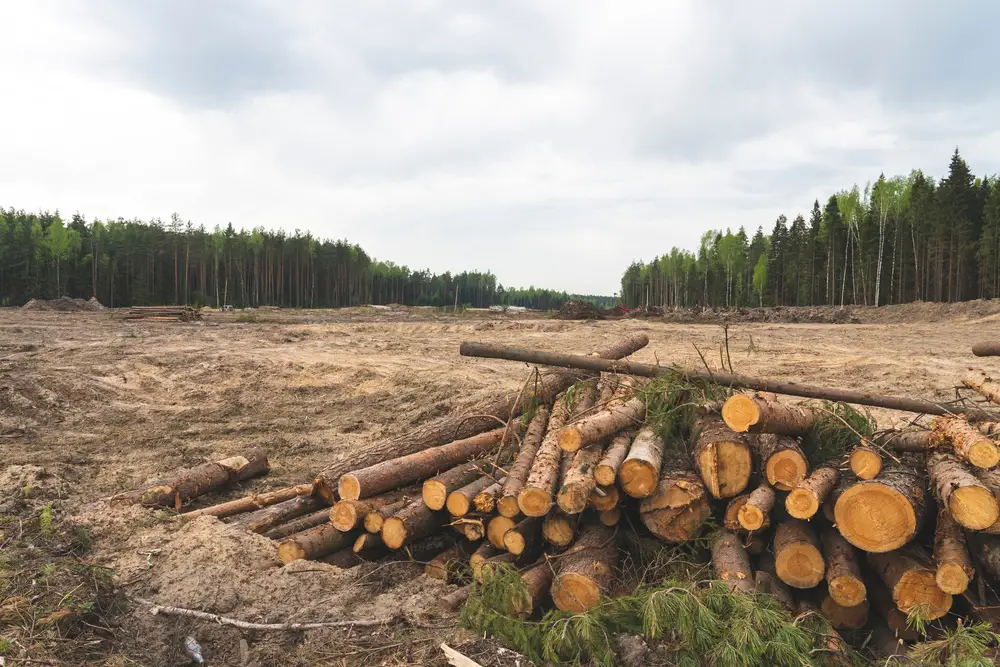
Illegal logging is a multifaceted threat with consequences that extend far beyond trees alone. It affects the environment, the global economy and the lives of those who rely on forests. By now, 2022, some 26% of the world’s rainforest had been lost or severely degraded. Consider, for example, Rondônia, where just three decades ago it was virgin forest — and today, an area the size of West Virginia has been wiped clean. This magnitude of transformation doesn’t occur in isolation. It’s often propelled by systems that run far deeper.
- Illegal logging is connected to organized crime, with criminal syndicates transporting wood across countries, sometimes with falsified paperwork.
- Corruption is rampant. Officials may turn a blind eye or accept bribes, allowing illegal loggers to operate with impunity.
- Governments lose revenue because illegal timber sales evade taxes and fees, siphoning off public funds.
- Displaced local people or lost access to resources – can no longer make a living.
Illegal logging ripples undermine market confidence. Sustainable forestry certification, such as FSC, ensures buyers wood comes from legal, well-managed sources. When illegal timber slips into the supply chain, it’s difficult to distinguish legal from illegal wood. This undermines certification schemes and undercuts reputable firms. Consumers don’t trust labels and unknowingly support illicit trade. For those communities that rely on selling certified timber, it spells less revenue and less employment.
The consequences reverberate further. Unregulated logging leaves forests no time to recover. Being clearcut in watersheds means more sediment and runoff go into rivers and damage fish and people’s clean water. If deforestation reaches 40%, the rainforest could collapse. It would mean that we’d lose many thousands of plants and animals, some unique to that location.
Illegal logging – and its ripple effects, On a global level, forests logged illegally cease to function as efficient carbon sinks. Healthy forests absorb carbon dioxide, mitigating climate change. When trees are felled or burned, they re-emit carbon into the atmosphere. This makes it worse–deforestation emits massive volumes of CO2 annually. Halting deforestation might rescue the global economy by £110 billion annually and reduce carbon dioxide emissions. Every hectare counts for climate and future stability.
| Legal Logging | Illegal Logging | |
| Economic Impact | Supports jobs, tax revenue | Lost taxes, unfair market |
| Ecosystem Health | Managed for regrowth, less harm | Severe loss, less recovery |
| Climate Effect | Maintains carbon sinks | Adds CO2, weakens climate action |
| Social Outcome | Benefits local communities | Displaces people, fuels crime |
Forest structure, soil, and water systems
Logging knocks down the upper forest stratum and disrupts forest dynamics. When you cut trees, the canopy opens. This allows sunlight, wind and rain to strike the earth. The absence of thick overhead cover alters what plants can thrive beneath. Some natives suffer or disappear when things change. In the Mediterranean, temperate or tropical forests, the canopy is affected by droughts, storms, wildfires and insects. When logging occurs, these stresses are exacerbated. For instance, Indonesian Bornean or Malaysian moist-forest logging exacerbates drought damage. In Uganda and Zimbabwe, mountain and moist forests similarly exhibit increased leaf loss during post-logging dry spells. Forests don’t all respond in the same way—some are more sensitive to drought than others, and the amount of water lost during dry months provides an excellent indicator of how the canopy will appear afterwards.
Deforestation alters the soil as well. Without the roots of the trees to stabilize it, erosion accelerates. Rain washes away the topsoil – which normally contains the most nutrients. This can make it difficult for native plants to return. The machines used for logging crush the soil, forcing out the air pockets that roots require. Soil eventually loses its natural structure, holding less water and nutrients. That means the soil can’t sustain the same plant community, and weeds or invasives can begin to take hold. If there’s bad soil, any new trees that try to grow will have a hard battle. In many places, once the soil is shot it’s tough to return to the original forest.
Water systems are impacted by alterations in the canopy and soil. Tree and leaf cover tends to decelerate rain, allowing water to infiltrate softly. Without a complete canopy, more rain strikes the earth quickly, causing more runoff. This not only dries out the soil but blasts more water rushing into streams and rivers. It disrupts the natural water cycle, and less rain water is held in the ground for dry periods. When water runs off hard soil, it sloshes loose dirt into rivers. This sediment muddies the water and can smother fish and other aquatic organisms. Bad water quality doesn’t only impact fish — it can impact entire river systems downstream. Rainfall patterns shift and erratic rain can spark even more leaf dieback or canopy thinning, exacerbating the issue every season.
Climate change adds another layer of stress by altering the functioning of forests from the cellular level to the ecosystem level. Warming and strange rainfall patterns can alter plant survival and growth rates. Microclimates—those small pockets of cooler, wetter air under the canopy—begin to disintegrate, which alters how vegetation reacts to new heat or drought.
Fires, invasive species, and disease introduction
Logging transforms forest ecology by breaking up the closed canopy. When trees are felled, sun rays parch the soil and wind whisk about unhindered, which dries out the area and allows dead leaves and branches to accumulate, serving as kindling. These alterations frequently result in increased risk of fires, particularly in areas already struggling with drought or extended dry seasons. In California, for example, 95% of forest fires are set by humans — and logging creates additional opportunity for these blazes to ignite. Drier conditions, combined with earlier snowmelts and more bug-felled dead trees, are causing fire seasons to grow longer and more difficult to control in numerous regions. The connection between open canopy space and more frequent, larger fires is obvious in forests worldwide.
Disturbed forests are welcome mats for invasive species. When logging clears patches or constructs roads, it facilitates the spread of invasive plants and animals. They can begin in cities or farms and infiltrate forests through clearings created by logging. Timber roads provide an avenue for invasive species and diseases into virgin territories. Humans, whether rolling logs or driving trucks, can transport seeds, insects and spores very far. Once inside, invasives often outcompete native species, altering the forest composition and even its function. This can result in permanent, widespread loss of native trees and animals.
Logging equipment and roads are about more than moving wood. They transport pests and diseases that can ravage forest health. Whether it’s unclean machinery or timber shipped thousands of miles, small bugs or chunks of fungus can easily tag along. Once these newcomers touch down in a forest with scant native resistance, they can race unchecked. Destruction by invasive forest pests can devastate native tree species — particularly those that form intimate, specialized relationships with their partner tree. The introduction of these pests and diseases can be very expensive. In the US alone, invasive species result in the loss of approximately $2.1 billion each year in forest products alone. In addition, governments and landowners invest billions more in prevention, control, and other measures to contain the spread.
Key invasive species and diseases found after logging events include:
- Emerald ash borer (Agrilus planipennis)
- Sudden oak death (Phytophthora ramorum)
- Asian longhorned beetle (Anoplophora glabripennis)
- Dutch elm disease (Ophiostoma ulmi)
- Pine wood nematode (Bursaphelenchus xylophilus)
- Japanese knotweed (Fallopia japonica)
- Gypsy moth (Lymantria dispar)
These alterations cascade through the food chain and can even rearrange the way forests sequester water, carbon and nutrients. The costs accumulate quickly—from forest product losses to costly management and restoration efforts.
Regeneration and recovery prospects
Forests regenerate after logging, but how close they come to full canopy restoration is a matter of forest type, logging intensity, and surrounding conditions. In tropical rainforests, for instance, regrowth is possible when logging is light and seed sources are nearby. In areas that are heavily logged or cleared, the chances of recovery are reduced. Logged forests have lost their best seed trees and their soil health, so seedlings just don’t grow as easily. New trees in these forests are struggling, and survival is significantly less than in pristine forests. Even in tree planting projects, research determines that seedlings are less likely to survive than in natural, untouched forests.
Soil destruction is a huge barrier. When machines take out big trees, they take out topsoil and compact the remainder. This makes it difficult for roots to establish themselves and for rain to soak into. Nutrients flow away with every rainstorm, the earth a little poorer. Seed sources diminish. Logging extracts mature trees in the process which would drop seeds, stunting what can regrow. Seed predators, such as bearded pigs, gravitate to regrowth patches with accessible meals, but they don’t hang around in sub-par forest. This can disrupt the equilibrium of what plants regrow and further delay recovery.
Biodiversity is another crucial component. Species richness—the number of different plants—declines rapidly following logging. Research says a decline can begin as soon as six months into a repair project. Certain components of the plant community encountered bottlenecks, where particular taxa or traits failed to recover. Not just trees, vines, shrubs etc may not regenerate or recover. There is no one answer for the complicated mix of rainforests, as a shift in plant mix can ripple out to transform insects, birds and mammals.
It turns out that active restoration contributes to accelerating recovery. By cutting back weeds and protecting seedlings, assisted natural regeneration workers let young trees grow with less stress. Enrichment planting introduces missing species, particularly those that cannot return on their own. Either way can assist in restoring the forest canopy, but success varies with site conditions. In a few places, thoughtful selective logging allows forests to maintain much of their native biodiversity and ecosystem services, but even sustainably managed areas shed much of their carbon stores, especially with the removal of old, large trees.
| Forest Type | Recovery Timeline | Key Success Factors |
| Tropical rainforest | 20–100+ years | Soil health, seed source, disturbance |
| Temperate forest | 50–150 years | Species mix, landscape, human activity |
| Selectively logged | 10–50 years | Logging intensity, active restoration |
| Heavily logged | 100+ years or uncertain | Soil loss, seed limitation, intervention |